
Desserts
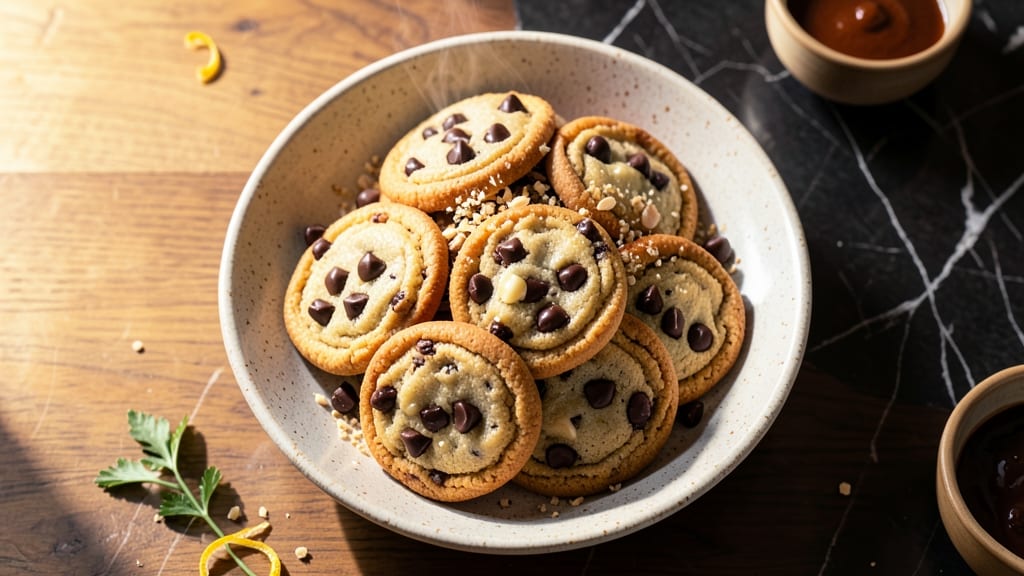
This allergy-free chocolate chip cookie recipe delivers the same gluten-free crunch and melty chocolate magic you love, without compromising texture or flavor. The secret lies in carefully chosen substitutes—like almond flour and flax eggs—that create a sturdy yet tender cookie base.
I've tested this recipe dozens of times to ensure it holds up to baking, stays crisp at the edges, and remains soft in the center, just like classic chocolate chip cookies.
What makes these cookies truly special is their ability to accommodate multiple allergens without sacrificing taste. Dairy-free butter and coconut sugar maintain that familiar caramelized sweetness, while xanthan gum binds the dough just enough to prevent crumbling.
The result? A cookie that's sturdy enough to handle ice cream toppings but still melts in your mouth with every bite.
You'll end up with golden-brown cookies featuring pockets of gooey chocolate chips and a subtle nutty flavor from the almond flour. The edges stay crispy while the centers remain tender, proving that allergy-friendly baking doesn't mean giving up on texture or taste.
These cookies are perfect for sharing with friends who have dietary restrictions—or simply treating yourself without worry.
One of the best parts? This recipe scales perfectly for baking sheets, making it ideal for holidays, potlucks, or satisfying a sudden cookie craving. The dough can be prepped ahead and chilled, so you're ready to bake whenever inspiration strikes. Let's get started!
Ingredients for allergy free chocolate chip cookie
These 11 ingredients create allergy-free cookies with the same magic you love—crunchy edges, melty centers, and pockets of chocolate.
| Ingredient | Amount | Notes |
|---|---|---|
| Almond Flour 🌰 | 2 ½ cups | Finely ground, unsweetened |
| Coconut Sugar 🍯 | 1 cup | Lightly packed for sweetness |
| Dairy-Free Butter 🧈 | 1 cup | Melted, unsalted preferred |
| Large Eggs 🥚 | 4 whole | Or 4 flax eggs (1 tbsp flaxseed + 3 tbsp water per egg) |
| Vanilla Extract 🌿 | 1 tbsp | Pure, high-quality preferred |
| Xanthan Gum 🧪 | ½ tsp | Essential for gluten-free binding |
| Sea Salt 🧂 | ½ tsp | Fine grain for even distribution |
| Chocolate Chips 🍫 | 2 cups | Dairy-free, semi-sweet preferred |
| Unsweetened Applesauce 🍎 | ½ cup | For moisture, unsweetened |
| Baking Soda 🧫 | ½ tsp | For lift and texture |
| Ground Cinnamon 🌶️ | ¼ tsp | Optional, for warmth |
Almond flour is the secret to that sturdy yet tender texture. Bob's Red Mill or Anthony's Goods are my go-tos for quality, but any finely ground almond flour works. The coconut sugar adds caramel notes without the refined sugar crash—Wholesale Supplies Plus has the best price for bulk. Dairy-free butter matters here; Miyoko's or Earth Balance melt beautifully. The chocolate chips? Enjoy Life brand is the only one I trust for allergy-free baking—no cross-contamination risks. If you can't find it, check the dairy-free section at Whole Foods or Sprouts.
No flaxseeds? Applesauce works in a pinch, but flax eggs give better texture. Short on almond flour? Oat flour or rice flour can replace up to half, but the cookies will be denser. The xanthan gum is non-negotiable—it's what keeps these from crumbling like sad gluten-free cookies of the past. Nutiva sells it in small packets, perfect for occasional baking. For the cinnamon, I usually skip it, but if you're adding it, McCormick's organic is my pick. The vanilla? Nothing but Pure is worth the splurge—fake vanilla ruins everything.
Dough keeps for 5 days in the fridge, wrapped tightly in plastic. For longer storage, freeze portions for up to 3 months. I like to shape the dough into balls ahead, then bake straight from frozen—just add 2 minutes to the baking time. These cookies reheat beautifully; pop them in the oven at 300°F for 5 minutes to restore that fresh-baked warmth. The chocolate chips stay gooey longer if you chill the dough for 30 minutes before baking—trust me on this.
Why You'll Love This Recipe
- No-Fuss Mixing: I swear, these cookies take three ingredients to combine—just almond flour, dairy-free butter, and coconut sugar. The eggs and vanilla go in last, and honestly? No creaming, no overworking. Just toss, press, bake. That’s it.
- Rich Without Guilt: The almond flour gives them a nutty depth that’s way more interesting than your standard cookie, while coconut sugar keeps things caramel-y without the refined sugar crash. Plus, the dairy-free butter? Melts into pure, buttery satisfaction—no weird aftertaste here.
- Packable & Portable: Between us, these are my go-to for lunchboxes, road trips, or when I need a snack that won’t turn to mush. They hold their shape (thanks to that egg binding) and taste just as good cold as they do warm. My kid’s teacher even asked for the recipe.
- Budget-Friendly Batch: A single batch makes 24 cookies—enough to freeze half for later. Almond flour is pricier upfront, but it lasts forever, and coconut sugar stretches further than white sugar. I’ve made these for birthdays, potlucks, and random cravings without breaking the bank.
Step-by-step instructions for gluten-free chocolate chip cookies
Here's how to create chewy, allergy-friendly cookies with perfect texture every time.
Mix Wet Ingredients for Perfect Texture
In a large mixing bowl, combine the 1 cup dairy-free butter with the 1 cup coconut sugar and 0.5 cup unsweetened applesauce. Use a hand mixer on medium speed for 3-4 minutes until the mixture is light and fluffy—you'll see it nearly double in volume. This step incorporates air, which helps create that signature chewy texture.
Add the 4 whole large eggs one at a time, mixing well after each addition. Then stir in the 1 tbsp vanilla extract and 0.25 tsp ground cinnamon. The mixture should be smooth but slightly thick. If you're using flax eggs instead, make sure they're fully combined before adding to avoid lumps.
Combine Dry Ingredients for Gluten-Free Binding
In a separate bowl, whisk together the 2.5 cups almond flour, 0.5 tsp xanthan gum, 0.5 tsp baking soda, and 0.5 tsp sea salt. The xanthan gum is crucial here—it mimics gluten's binding properties to give your cookies structure. Sift the mixture lightly to prevent clumps, especially with the almond flour.
Gradually add the dry ingredients to the wet mixture, mixing on low speed until just combined. You're looking for a thick, cohesive dough that holds together when pressed. Overmixing can develop gluten-like properties in the almond flour, so stop as soon as everything is incorporated—you should still see some flour streaks.
Fold in Chocolate Chips for Even Distribution
Using a silicone spatula, gently fold in the 2 cups dairy-free chocolate chips. Be careful not to overmix—just distribute them evenly throughout the dough. I like to press a few chips into the bottom of the mixing bowl first so they don't all end up in the center of the cookies.
This is where you'll notice the difference in texture compared to traditional cookies. The applesauce adds moisture while keeping the cookies tender, and the almond flour gives that perfect crunch without gluten. Cover the bowl with plastic wrap and refrigerate for at least 30 minutes—this chilling step is non-negotiable for gluten-free baking.
Scoop and Bake for Golden Perfection
Preheat your oven to 350°F and line two baking sheets with parchment paper. Using a 2-tablespoon cookie scoop, portion the chilled dough onto the prepared sheets, spacing them about 2 inches apart. The dough will be softer than traditional cookie dough, so handle it gently to maintain shape.
Bake for 11-13 minutes until the edges are golden brown but the centers still look slightly underdone. They'll continue setting as they cool. The cookies should pull away from the edges of the parchment paper when you lift them, but still be soft in the middle—this is the hallmark of perfect texture.
Cool and Enjoy Your Allergy-Friendly Treats
Let the cookies cool on the baking sheets for 5 minutes before transferring them to a wire rack to cool completely. The first few minutes after baking are when they're most tender and gooey—this is the best time to enjoy them! Store any leftovers in an airtight container for up to 5 days or freeze for longer storage.
Each bite should deliver that perfect balance of chewy center, crispy edges, and melty chocolate. The cinnamon adds subtle warmth, while the applesauce keeps them moist without making them cakey. These cookies prove that allergy-friendly baking can be just as delicious as the classic version!
Pro Tips For Making Allergy Free Chocolate Chip Cookie
- Chill the Dough: Almond flour cookies spread fast—I learned this after watching my first batch flatten into pancakes. Press the dough into a disk, wrap it in parchment, and refrigerate for at least 2 hours (overnight works best). The cold fat in the dairy-free butter behaves better, and you’ll get those classic cookie edges.
- Toast the Almond Flour: Skipping this step means nutty flavor gets lost in the sugar. Dry-toast the almond flour in a 350°F oven for 8–10 minutes, stirring once, until it smells toasty and deepens in color. It’s non-negotiable—your cookies will taste richer, and the texture stays chewy without gummy aftertaste.
- Underbake Slightly: Coconut sugar caramelizes faster than white sugar, so pull your cookies when edges are just set but centers still look soft (about 10–12 minutes in a 350°F oven). They’ll firm up as they cool—overbaking turns them dry, and no one wants that with almond flour’s natural density.
- Whip the Eggs: Room-temperature eggs mix better, but give them a quick 10-second whip in the mixer before adding them to the dry ingredients. This incorporates air, balancing the heaviness of almond flour and ensuring lighter, airier cookies. (Yes, even if you’re impatient like me—trust the process.)
Wine and beer pairings for these flavors
Sweet Wine Pairings
For these allergy-friendly cookies, I reach for Moscato d'Asti—its light, fruity notes complement the caramelized coconut sugar without overpowering the chocolate. A crisp Pinot Grigio from Italy also works beautifully, with its citrusy brightness cutting through the richness.
Avoid heavy reds like Cabernet, as they can clash with the delicate almond flour texture. 🍷
Creamy Beer Options
A Belgian witbier like Hoegaarden is my go-to beer pairing—its coriander and citrus flavors mirror the subtle cinnamon in the cookies. For something lighter, try a honey lager such as Blue Moon, which enhances the caramel notes from the coconut sugar.
Stay away from dark beers or IPAs, as their bitterness can compete with the chocolate chips.
Dessert Wine Magic
If you're serving these as an after-dinner treat, a late-harvest Riesling from Germany adds a perfect balance of sweetness and acidity. The slight floral notes in the wine complement the vanilla and almond flavors beautifully. For a more affordable option, White Zinfandel works surprisingly well with its berry undertones. 🍇
Non-Alcoholic Pairings
Don't overlook sparkling apple cider—its effervescence cleanses the palate between bites of rich cookies. For something warmer, try chai tea with a splash of milk (or dairy-free alternative), which echoes the cinnamon in the recipe.
A vanilla latte made with coconut milk also creates a comforting pairing that highlights the cookie's texture.
Seasonal Adjustments
In summer, I love pairing these cookies with peach iced tea—the fruity notes contrast nicely with the chocolate. For winter gatherings, a spiced cider with cinnamon sticks enhances the warm flavors in the cookies. The key is to match the drink's temperature and sweetness level with the cookie's richness.
Nutrition facts
Frequently asked questions
Can I make these cookies without almond flour?
Yes, but texture may change. Substitute with oat flour or rice flour (up to 1.5 cups) and add 1 extra tbsp xanthan gum for binding. The cookies will be denser but still delicious. For nut-free options, try sunflower seed flour—just reduce by 1/4 cup since it's less dense.
Why do my gluten-free cookies spread more than regular ones?
Gluten-free dough lacks natural proteins that hold shape, so spreading is normal! Use a 2-tablespoon scoop and chill dough for 1 hour to firm it up. Bake on parchment paper and avoid overcrowding sheets. The 350°F temp helps prevent excessive spreading while keeping centers soft.
How can I make these cookies nut-free?
Replace almond flour with oat flour or sunflower seed flour (use 2 cups instead of 2.5). Add 1 extra tbsp xanthan gum and reduce applesauce to 1/4 cup to compensate for moisture differences. The texture will be slightly denser but still tasty!
Can I use regular chocolate chips instead of dairy-free?
Only if your household has no dairy allergies! Cross-contamination is a serious risk for those with severe allergies. Stick with certified dairy-free brands like Enjoy Life or Pascha to ensure safety. The flavor difference is minimal, and you avoid potential reactions.
Why did my cookies turn out cakey instead of chewy?
Overmixing or too much applesauce causes cakey texture. Mix dry ingredients just until combined, and measure applesauce precisely (1/2 cup). For extra chewiness, chill dough 2 hours instead of 30 minutes. Underbaking by 1 minute also helps maintain softness in the center.