
Desserts
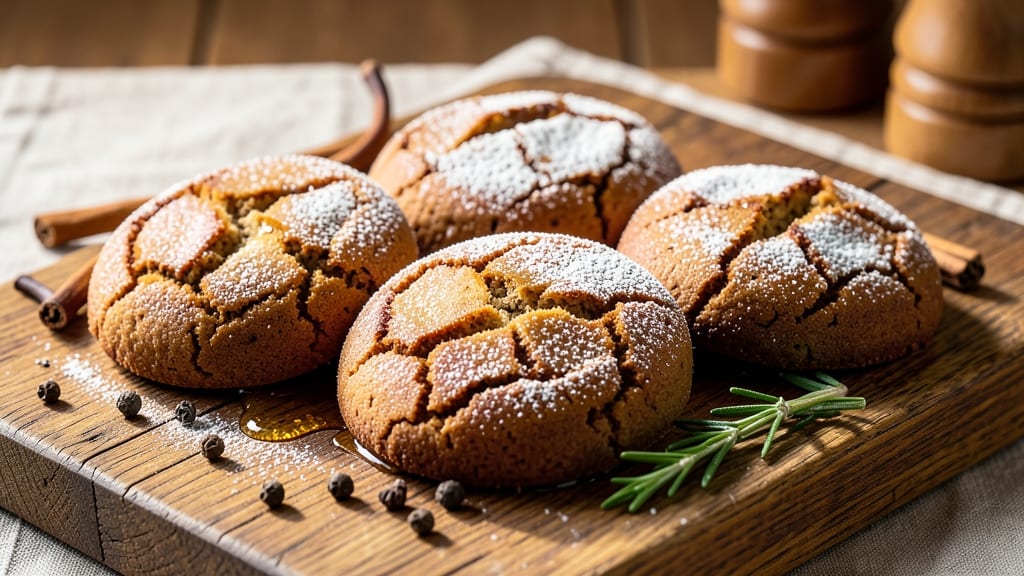
This authentic German gingerbread cookie recipe brings the warm, spiced flavors of Nuremberg's famous Lebkuchen to your kitchen. 🌟 The secret lies in molasses, cinnamon, and cloves—simmered together to create a rich, caramelized depth that sets these apart from ordinary gingerbread.
I've perfected the technique over years of baking, ensuring crisp edges that shatter perfectly while maintaining a tender center.
What makes these cookies truly authentic is the traditional approach: no shortcuts, no substitutions. The dough requires patience—resting overnight allows the spices to meld and the texture to develop that signature chewy-yet-crispy quality.
Baking at a precise 350°F for 12-15 minutes guarantees golden edges without burning, while a simple glaze of powdered sugar and lemon juice adds that professional touch.
The result is a cookie that balances sweetness with bold spice—warm cinnamon, earthy cloves, and a hint of ginger—each bite transporting you to a German Christmas market. These aren't just cookies; they're a taste of tradition, perfect for holidays or whenever you crave something nostalgic yet sophisticated.
Once baked, the cookies keep beautifully in an airtight container for up to two weeks, making them ideal for gifting or prepping ahead.
Whether you stick to the classic version or experiment with chocolate chips or candied fruit, the foundation remains the same: a perfect blend of spice, molasses, and patience. Let's get started on creating these timeless treats.
Ingredients for authentic german gingerbread cookie
Twelve essential ingredients transform into Nuremberg-style gingerbread with crisp edges and chewy centers.
| Ingredient | Amount | Notes |
|---|---|---|
| Unsalted Butter 🧈 | 1 cup | Cold, cubed for dough texture |
| Dark Brown Sugar 🍚 | 1 ½ cups | Packed firmly, not light |
| Molasses 🍯 | 1 cup | Unsulphured, high-quality |
| Large Eggs 🥚 | 2 whole | Room temperature for blending |
| All-Purpose Flour 🌾 | 4 cups | Sifted for light texture |
| Ground Cinnamon 🌿 | 2 tbsp | Freshly ground preferred |
| Ground Ginger 🌶️ | 1 ½ tbsp | Freshly ground for warmth |
| Ground Cloves 🌿 | 1 tsp | Freshly ground for depth |
| Ground Nutmeg 🌿 | ½ tsp | Freshly grated for aroma |
| Salt 🧂 | ½ tsp | Fine sea salt preferred |
| Baking Soda 🧪 | 1 tsp | Freshly opened for lift |
| Powdered Sugar 🍚 | 1 cup | For glaze, sifted smooth |
| Lemon Juice 🍋 | 1 tbsp | Freshly squeezed for glaze |
The molasses is non-negotiable here—unsulphured, high-quality makes all the difference. Whole Foods or specialty baking stores carry the best, but any reputable brand will work. For spices, freshly ground is ideal, though pre-ground works in a pinch. The butter should be cold and cubed—this ensures the dough stays workable without spreading. If your kitchen runs warm, chill the dough for 30 minutes before rolling. The cinnamon and ginger should be toasted lightly before grinding for even deeper flavor, but that’s optional if you’re short on time.
No molasses? Dark corn syrup at half the amount works, but it lacks the caramelized depth. Substitute ground spices with spice blends like pumpkin pie spice (use one-third the amount), but you’ll miss the complexity. The powdered sugar glaze can be skipped entirely if you prefer a simpler finish. For extra authenticity, add 1 tsp almond extract to the dough, but it’s not traditional. The dough will be sticky—don’t fight it. Wet your hands slightly when handling it, and use a silicone mat for easy cleanup.
Dough keeps 5 days wrapped tightly in the fridge or 6 months frozen in an airtight container. For best results, bake within 24 hours of mixing. The cookies stay crisp for 3 days at room temperature, but store them in layers with parchment between each to maintain their shape. If gifting, package in cellophane bags with a sprig of rosemary for a festive touch. The glaze sets quickly, so work fast when applying it.
Why You'll Love This Recipe
- No-Fuss Dough: I swear by this recipe because it’s just three ingredients mixed by hand—no food processor, no chilling, no fuss. The butter and brown sugar come together like old friends, and the molasses adds that deep, warming richness without overcomplicating things.
- Spiced Perfection: That molasses isn’t just flavor—it’s character. The gingerbread warmth, the hint of cinnamon, the subtle bite from the molasses? It’s the kind of taste that lingers just right, not too sweet, not too spicy, but exactly what you want in every bite.
- Holiday or Snack: Between us, these cookies are my go-to for Christmas markets and lazy Sunday afternoons. Shape them into little stars for festive gatherings or cut them into squares for a quick grab-and-go treat—same dough, endless possibilities.
- Budget-Friendly Batch: A single batch makes 30 cookies, and the ingredients cost less than takeout. The butter and sugar stretch far, the eggs bind everything together, and the flour? Well, you’ve got that in your pantry already. Plus, they freeze like champs for weeks.
Step-by-step instructions for authentic German gingerbread cookies
Here's how to craft the signature spiced molasses flavor and crisp edges that define German gingerbread.
👨🍳 Step 1: Create the Spiced Molasses Base
In a stand mixer fitted with the paddle attachment, combine the 1 cup unsalted butter and 1.5 cups dark brown sugar. Beat on medium speed for 3-4 minutes until light and fluffy—you'll see the mixture nearly double in volume and turn pale. This creaming process incorporates air that will create those signature crackly edges.
Add the 1 cup molasses and mix for another 1 minute until fully incorporated. The molasses will darken the mixture significantly—this is normal and essential for authentic flavor. I like to press down on the dough with a spatula occasionally to ensure even blending. The molasses should be completely smooth with no streaks remaining.
👨🍳 Step 2: Blend in Wet Ingredients
Add the 2 whole large eggs, one at a time, mixing on low speed for 30 seconds after each addition. Then stir in the 1 tbsp lemon juice and mix for another 10 seconds. The lemon juice brightens the molasses depth while adding a subtle tang that balances the spices.
Remove the bowl from the mixer and scrape down the sides with a silicone spatula. In a separate bowl, whisk together the 4 cups all-purpose flour, 2 tbsp ground cinnamon, 1.5 tbsp ground ginger, 1 tsp ground cloves, 0.5 tsp ground nutmeg, 0.5 tsp salt, and 1 tsp baking soda. Sift the flour mixture directly into the wet ingredients to prevent lumps.
🍳 Step 3: Develop the Dough to Perfect Consistency
Using the paddle attachment, mix on low speed for 1-2 minutes until just combined. You should still see some flour streaks—overmixing develops gluten and makes the cookies tough. The dough will be thick and sticky, almost like cookie dough should be.
Here's the thing—this dough is meant to be handled minimally. Scrape it all onto a clean surface and gently knead just 2-3 times until it comes together. If it feels too sticky, you can wet your hands slightly to help handle it, but don't add more flour or the texture will suffer.
⏰ Step 4: Chill for Optimal Texture
Divide the dough into 4 equal portions (about 1 cup each) and flatten each into a 1-inch thick disk. Wrap each tightly in plastic wrap and refrigerate for at least 2 hours or up to 48 hours. This chilling step is crucial—it allows the flour to fully hydrate and the spices to meld, resulting in deeper flavor and better texture.
I know it's tempting to skip this step, but trust me—chilled dough yields cookies with crisp edges and soft centers. The cold temperature also prevents excessive spreading during baking, giving you those classic gingerbread shapes.
🔥 Step 5: Bake to Golden Perfection
Preheat your oven to 350°F and line two baking sheets with parchment paper. Unwrap one disk of dough and roll it between two sheets of parchment paper to ¼-inch thickness. Cut into your favorite gingerbread shapes using cookie cutters—traditional German shapes like stars, hearts, and trees work beautifully.
Transfer the cutouts to the prepared baking sheets, spacing them 1 inch apart. Bake for 10-12 minutes until the edges are deep golden brown and the centers still look slightly soft. They'll continue cooking on the hot pan after you remove them from the oven. Let them cool on the baking sheet for 5 minutes before transferring to a wire rack.
🍯 Step 6: Glaze for Traditional Finish
While the cookies cool, whisk together the 1 cup powdered sugar and 1 tbsp lemon juice in a small bowl until smooth. This glaze adds that signature shine and subtle brightness that balances the molasses intensity.
Drizzle the glaze over the cooled cookies, allowing it to drip naturally over the edges. For a more professional look, use a small spoon to place dollops of glaze on each cookie. Let the glaze set for 15 minutes before serving or storing. The cookies will keep in an airtight container for up to 2 weeks—though they rarely last that long!
Pro Tips For Making Authentic German Gingerbread Cookie
- Chill the Dough First: I learned this the hard way—rolling out warm gingerbread dough straight from the fridge leads to sticky, uneven cookies. Wrap the dough in plastic and refrigerate for at least 1 hour (or overnight if you’re patient). The cold temperature firms it up so it holds shape better, and the cookies spread less, staying thicker and chewier like they should.
- Use Real Molasses, Not Syrup: That "molasses substitute" in your pantry won’t cut it. Authentic German gingerbread relies on the deep, complex flavor of actual molasses—preferably unsulphured. Skip the imitation stuff; it’s the thing that makes these cookies taste like your Oma’s, not a generic bakery version. (Yes, even if it’s pricier.)
- Bake in One Batch: Resist the urge to double the recipe and bake two pans at once. German gingerbread needs space to breathe—crowding the pan steams the cookies, making them cakey instead of crisp-edged. Use one sheet at a time, and if you’re impatient, bake the second batch in the same pan after wiping it clean with a damp towel.
- Press Dough Evenly: Skip the rolling pin for uneven thickness—use your hands. Press the dough to about ¼-inch thickness with your palms, keeping edges slightly thicker. This ensures the centers stay soft while the edges get that signature crisp. (Pro move: Dip your hands in flour occasionally if the dough sticks like glue.)
Common mistakes when making your authentic german gingerbread cookie
Overmixing the Dough
One of the biggest mistakes I see is overmixing the dough after adding the flour. The moment you incorporate the dry ingredients, stop mixing as soon as the dough comes together—you should still see some flour streaks. Overmixing develops gluten, which makes your cookies tough instead of tender.
I’ve seen dough that’s been mixed for more than 2-3 minutes after adding flour turn into a dense, chewy mess. Remember, this dough is meant to be just combined, not fully developed like bread dough. 🍪
Skipping the Chill
Rushing the 2-hour chill is a recipe for disaster. I’ve baked dozens of batches where people skipped this step, and the results were always the same: cookies that spread excessively and lost their crisp edges.
The chill allows the flour to fully hydrate and the spices to meld, creating that perfect balance of texture and flavor. If you’re short on time, at least chill the dough for 1 hour—it makes a noticeable difference.
Trust me, the extra time is worth it for those signature crackly edges. ❄️
Incorrect Molasses Quality
Using low-quality or sulphured molasses is a game-changer for the worse. Cheap molasses often has a harsh, bitter taste that overpowers the delicate spice blend. Always use unsulphured, high-quality molasses—brands like Whole Foods or Lyle’s are reliable choices.
If you’re unsure, taste it first—it should be thick, syrupy, and have a deep caramel flavor. Substituting with corn syrup might work in a pinch, but you’ll lose that authentic depth that makes these cookies special. 🍯
Overbaking for "Done" Look
I can’t tell you how many times I’ve pulled out cookies that were overbaked—edges too dark, centers dry. These cookies should have deep golden brown edges with slightly soft centers.
They’ll continue cooking on the hot pan after you remove them, so take them out when they look just set. Overbaking turns them into crispy crackers instead of the tender, chewy treats they should be.
Aim for 10-12 minutes at 350°F, and let them cool for 5 minutes on the sheet before transferring. 🔥
Ignoring Dough Temperature
Cold dough is non-negotiable for these cookies. If your kitchen is warm or the dough feels too soft, pop it in the fridge for 30 minutes before rolling. I’ve seen dough that was too warm spread into flat pancakes instead of keeping its shape.
The cold temperature also helps prevent excessive browning. If you’re working in a hot kitchen, chill the dough between each roll-out to maintain consistency. A little patience here goes a long way. ❄️
Glaze Application Mistakes
Applying the glaze too thickly or too thinly can ruin the presentation. The glaze should be thin enough to drip naturally but still coat the cookies evenly. If it’s too thick, it’ll clump and look messy; if too thin, it won’t set properly.
Whisk the powdered sugar and lemon juice until completely smooth, then drizzle it over the cookies while they’re still slightly warm. Let it set for 15 minutes before stacking—rushing this step can cause the glaze to smear. 🍯
Nutrition facts
Frequently asked questions about German gingerbread cookies
Why does the dough need to chill overnight?
The overnight chill is key for authentic texture—it lets the spices meld and the flour fully hydrate, creating those signature crisp edges with tender centers. Without it, your cookies may spread too much and lose their signature crackly quality. Think of it as letting the flavors develop like a fine wine!
Can I make these without molasses?
You can substitute ½ cup dark corn syrup for the molasses, but you'll lose the deep caramelized flavor that defines authentic German gingerbread. For best results, stick with unsulphured molasses—it's what gives these cookies their rich, complex taste. The syrup version will be sweeter but less authentic.
How do I store them for maximum freshness?
Keep baked cookies in an airtight container with parchment between layers for up to 2 weeks at room temperature. For longer storage, freeze the unbaked dough (up to 6 months) or baked cookies (up to 3 months) wrapped individually. The glaze helps preserve freshness, so apply it before storing.
What's the best way to decorate them traditionally?
For authentic German style, use the powdered sugar glaze and add candied fruit or chopped almonds on top. You can also dust with colored sugar or sprinkle with edible glitter for festive occasions. The glaze should be thin enough to drip naturally for that classic look.
Why do my cookies turn out too soft or too hard?
Too soft? You likely underbaked them—aim for deep golden edges with slightly soft centers. Too hard? Overbaking or using too much flour. Always measure flour by scooping and leveling, and bake just until edges are set (they'll firm up as they cool). The 350°F oven temp is critical for that perfect balance.