
Desserts
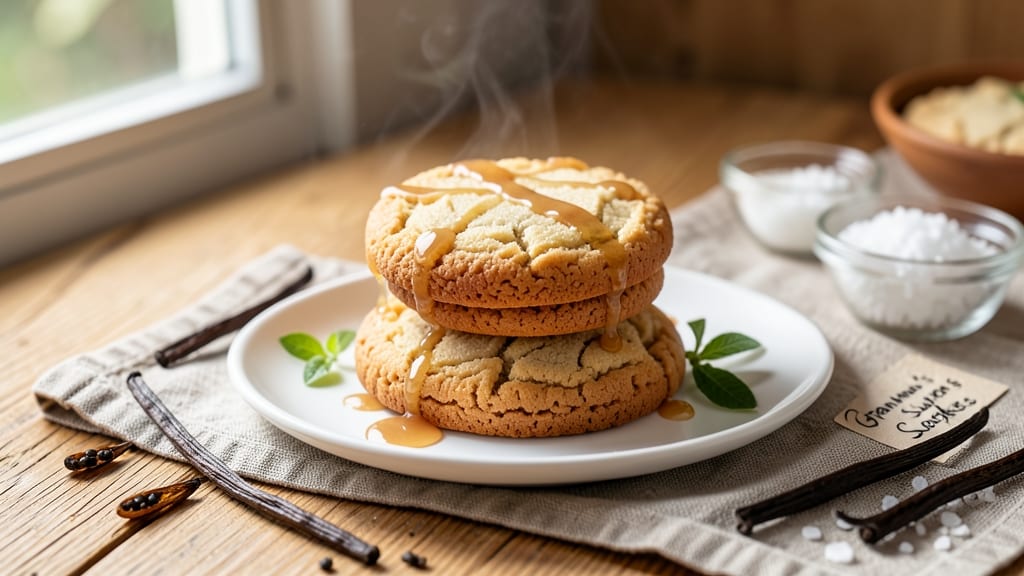
Baking sugar cookies at 350°F transforms simple dough into golden, buttery swirls with vanilla bean streaks that smell like a holiday bakery. ✨ The secret lies in precise ingredient ratios and proper chilling—no guesswork, just foolproof results every time. This recipe delivers cookies with crisp edges and tender centers, perfect for cutting into classic shapes or free-form swirls.
The dough comes together with just six ingredients: all-purpose flour, granulated sugar, unsalted butter, eggs, vanilla extract, and a pinch of salt. Creaming the butter and sugar properly creates air pockets that ensure light, fluffy cookies.
Rolling the dough to ¼-inch thickness guarantees even baking, while chilling for 30 minutes prevents excessive spreading during the 8–12 minutes in the oven.
Once baked, the cookies develop a delicate caramel hue with a buttery aroma that fills your kitchen. The vanilla bean streaks add visual appeal and a subtle floral note that elevates the flavor.
Whether you pipe intricate designs or cut simple rounds, these cookies hold their shape beautifully, ready for royal icing or melted chocolate drizzles.
Mastering this recipe means you’ll never buy store-bought again—they’re crisp enough to hold decorating details but soft enough to melt in your mouth. Let’s get baking!
Ingredients for bake at 350 sugar cookie
Six simple ingredients transform into buttery swirls with vanilla bean streaks at 350°F.
| Ingredient | Amount | Notes |
|---|---|---|
| All-Purpose Flour 🌾 | 2 ½ cups | Sifted for light texture |
| Granulated Sugar 🍚 | 1 cup | Superfine preferred for smooth dough |
| Unsalted Butter 🧈 | 1 cup | Cold, cubed for creaming |
| Large Eggs 🥚 | 1 whole | Room temperature for blending |
| Pure Vanilla Extract 🍯 | 1 tbsp | Or 1 vanilla bean for streaks |
| Salt 🧂 | ½ tsp | Kosher or fine sea salt |
| Vanilla Bean Paste 🌿 | 1 tbsp | For visible swirls (optional) |
| Powdered Sugar 🍚 | ½ cup | For rolling cookies |
The butter and sugar are non-negotiable for texture. European-style butter like Plugrá or Land O'Lakes has higher fat content, giving those perfect crisp edges. If you're using vanilla bean, scrape seeds from one pod—Trader Joe's sells affordable pods, or grab a whole bean at Whole Foods. For the flour, King Arthur or Gold Medal brands work best; avoid self-rising. The powdered sugar is just for rolling—don't skip it if you want that classic cookie look, but save it for after baking.
No vanilla bean? Double the extract—it's the same flavor, just no streaks. Substitute vanilla bean paste if you want visual appeal without the whole bean. Running short on butter? Coconut oil works in a pinch, but the flavor will be slightly different. For the sugar, superfine is ideal, but regular granulated works if you pulse it in a food processor. The dough should be cool and pliable—if it's too sticky, add 1 tbsp more flour. Too dry? Add 1 tsp milk or melted butter.
Chill the dough for 30 minutes minimum—this prevents spreading. Store wrapped in plastic in the fridge for 3 days or freeze dough balls for 3 months. Baked cookies keep in an airtight container for 5 days. For extra crispness, bake on a parchment-lined tray and let cool completely before decorating. These hold their shape beautifully for piping bags or cookie cutters.
Why You'll Love This Recipe
- No Mixer Needed: I swear by this dough—just fold the butter into flour until it resembles crumbs, then mix in sugar and vanilla. No standing at the counter for 10 minutes, no sticky mess. Honestly, my stand mixer gets jealous of how little attention this gets.
- Butter-Sugar Crunch: That crisp edge with the tender center? Pure magic from creaming butter and sugar properly. The vanilla extract cuts through the sweetness just enough to make it ridiculously good—not cloying, not flat, just right.
- Holiday or Hangry Fix: Decorate them for Christmas or dunk them in milk for a 3pm emergency. Same dough, endless uses. I’ve even shaped them into snowflakes for parties or rolled them into balls for quick baking when I forget to plan ahead.
- Pantry Staple Power: Five ingredients, all of which you already own. The butter and eggs add richness without breaking the bank, and the dough keeps for days in the fridge. Between us, I’ve made three batches this month and still have flour left over.
Step-by-step instructions for bake at 350°F sugar cookies
Perfectly balanced dough, rich vanilla flavor, and professional swirls—here's how to nail it.
👨🍳 Step 1: Cream Butter and Sugar for Maximum Flavor
In a stand mixer fitted with the paddle attachment, beat the cold, cubed unsalted butter and 1 cup granulated sugar on medium speed for 3-4 minutes. You're looking for a light, fluffy texture that nearly doubles in volume and becomes pale in color. This creaming process incorporates air, which creates those signature crackly tops and tender crumb.
I press the paddle against the butter mixture every 30 seconds to ensure even emulsification. The butter should soften but not melt completely—this prevents greasy cookies. If your kitchen gets warm, chill the bowl in the freezer for 10 minutes before proceeding. The goal is a smooth, ribbon-like consistency that holds its shape when the paddle is lifted.
👨🍳 Step 2: Add Egg and Vanilla for Structure and Depth
Add the 1 whole large egg (room temperature) and mix on low speed for 30 seconds until fully incorporated. Then add the 1 tablespoon pure vanilla extract and 1 tablespoon vanilla bean paste, mixing for another 20 seconds. The vanilla bean paste adds those beautiful marbled streaks while keeping the authentic vanilla flavor.
Here's the thing—don't overmix. You want a smooth, slightly thick dough that comes together but still shows some streaks of vanilla bean paste. If it looks too sticky, it's okay; the flour will absorb the moisture in the next step. I always taste the dough at this stage to ensure the vanilla flavor is balanced—it should be sweet but not overpowering.
👨🍳 Step 3: Incorporate Dry Ingredients for Light Texture
In a separate bowl, whisk together the 2.5 cups all-purpose flour and 0.5 teaspoon salt. With the mixer on low speed, gradually add the dry ingredients to the wet mixture, mixing just until combined. You should still see some flour streaks—this prevents tough cookies. Stop mixing as soon as the dough comes together.
For the vanilla bean streaks, I use a silicone spatula to gently fold in the remaining vanilla bean paste by hand. The key is to create swirls while keeping the dough cohesive. If the dough feels too dry, add 1-2 teaspoons of cold water to bring it together. The dough should be soft but not sticky enough to leave marks on your fingers when pressed lightly.
⏰ Step 4: Chill and Shape for Perfect Cookies
Divide the dough into 4 equal portions (about 8 ounces each) and flatten each into a 2-inch thick disk. Wrap each disk tightly in plastic wrap and refrigerate for at least 1 hour or up to 24 hours. Chilling is non-negotiable—it prevents the cookies from spreading too much in the oven and allows the flour to fully hydrate for a tender crumb.
I like to chill the dough overnight for even better results. The longer it rests, the more flavor develops. When ready to bake, preheat your oven to 350°F and line two baking sheets with parchment paper. Roll each chilled dough portion to ¼-inch thickness and cut out shapes using a 2.5-inch cookie cutter. Place cookies 2 inches apart on the prepared sheets.
🔥 Step 5: Bake to Golden Perfection and Finish
Bake the cookies for 10-12 minutes until the edges are golden brown but the centers still look slightly soft. They'll firm up as they cool. Rotate the baking sheets halfway through for even baking. Don't overbake—they should pull away from the parchment paper easily but still be slightly pliable in the center.
As soon as they come out of the oven, transfer the cookies to a wire rack and let them cool for 5 minutes. While still warm, roll each cookie in the 0.5 cup powdered sugar using a small mesh sieve or fine-mesh strainer. This creates that signature dusted look while keeping the cookies soft. For extra flavor, I like to add a pinch of flaky sea salt on top while they're still warm.
Pro Tips For Making Bake At 350 Sugar Cookie
- CHILL THE DOUGH: I learned this the hard way—rolling out warm dough makes it stretchy and messy. Wrap the dough in plastic and refrigerate for at least 1 hour (or up to 48 hours for deeper flavor). The cold butter won’t melt, and the cookies will hold their shape better when you bake them at 350°F.
- MEASURE BUTTER PRECISELY: That “1 cup” of softened butter? Use a kitchen scale instead. Packed butter weighs more than scooped butter, and your cookies will turn out either greasy or dry. Aim for 227g (1 cup) of butter at room temperature—press it into the measuring cup to avoid air pockets.
- SKIP THE OVERMIXING: Once you add the egg and vanilla, stop stirring after 20 seconds. Overworking the dough develops gluten, and your cookies will spread into sad, flat pancakes instead of chewy rounds. Just combine until the dry ingredients disappear—no need for a stand mixer here.
- BAKE ONE PAN AT A TIME: Crowding the oven with multiple pans of cookies at 350°F guarantees uneven baking. Space them 1 inch apart on the middle rack, and bake in batches if needed. The edges will brown faster than the centers, so rotate the pans halfway through the 10–12 minutes.
Pro cooking tips for this recipe
Creaming Secrets
The butter-sugar creaming step is where flavor and texture magic happens. Use European-style butter like Plugrá for higher fat content and better flavor. Cream on medium speed for exactly 3-4 minutes—no more, no less.
I press the paddle against the mixture every 30 seconds to ensure even emulsification and prevent greasy cookies. If your kitchen is warm, chill the bowl in the freezer for 10 minutes before proceeding. The butter should soften but not melt completely—this creates those signature crackly tops. 🔥
Vanilla Bean Swirls
For those beautiful vanilla bean streaks, use 1 tablespoon vanilla bean paste (like Madagascar Bourbon from Trader Joe's). Add it with the extract and mix just until combined. Don’t overmix—you want visible streaks while keeping the dough cohesive.
I like to fold in the remaining paste by hand with a silicone spatula for a more professional marbled effect. The paste adds depth of flavor beyond what extract alone can provide.
Dough Chilling
Chilling is non-negotiable for perfect cookies. Divide the dough into 4 equal portions and flatten into 2-inch disks. Wrap tightly in plastic and refrigerate for at least 1 hour (overnight is even better). This prevents excessive spreading and allows the flour to fully hydrate.
I always chill my dough overnight—it develops more flavor and makes rolling much easier. For a quick fix, freeze the dough balls for 15 minutes before rolling if you're short on time.
Rolling Technique
Roll the chilled dough to ¼-inch thickness using a rolling pin or cookie press. For even thickness, place the dough between two sheets of parchment paper before rolling. This prevents sticking and makes cleanup easier.
I like to use a 2.5-inch round cutter for classic sugar cookies, but you can also use holiday shapes or free-form swirls. Place cookies 2 inches apart on parchment-lined sheets—they’ll spread slightly during baking.
Baking Precision
Bake at 350°F for 10-12 minutes until the edges are golden but the centers still look soft. Rotate the sheets halfway through for even baking. Overbaking is the #1 mistake—cookies should pull away from the parchment easily but still be slightly pliable.
For extra crisp edges, bake on the middle rack of your oven. As soon as they’re done, transfer to a wire rack and let cool for 5 minutes before dusting with powdered sugar. 💫
Finishing Touches
While still warm, roll each cookie in powdered sugar using a fine-mesh strainer for that signature dusted look. For extra flavor, sprinkle with flaky sea salt (like Maldon) while warm. This balances the sweetness and adds a sophisticated touch.
Store cookies in an airtight container for up to 5 days—they’ll stay soft and delicious. For make-ahead baking, freeze dough balls for up to 3 months and bake straight from frozen (add 1-2 minutes to baking time).
Nutrition facts
Frequently asked questions
Can I substitute vanilla extract with vanilla bean paste?
Yes! Use 1 tablespoon vanilla bean paste instead of the extract to get those beautiful swirls. The paste adds visible flecks and deeper flavor. For best results, fold it in by hand with a spatula after mixing the wet ingredients. If you only have extract, double it to 2 tablespoons for stronger vanilla flavor.
Why are my cookies spreading too much?
Over-spreading usually happens when the dough isn't chilled long enough. Always refrigerate the dough for at least 1 hour (overnight is better). Also check your butter—if it's too soft or melted, the cookies will flatten. Use cold butter and roll the dough to ¼-inch thickness for perfect shape.
How do I get crispy edges on my sugar cookies?
For crisp edges, bake on the middle oven rack and rotate the sheets halfway through baking. Use European-style butter (like Plugrá) for higher fat content. Bake until edges are golden but centers are still soft—10-12 minutes at 350°F. Let them cool completely before decorating to prevent sogginess.
Can I make this dough ahead of time?
Wrap the dough disks in plastic and refrigerate for up to 3 days or freeze for 3 months. For frozen dough, thaw in the fridge overnight before rolling. You can also freeze shaped dough balls—just add 1-2 extra minutes to baking time when frozen.
What's the best way to decorate these cookies?
While warm, roll in powdered sugar for a classic look. For decorating, let cookies cool completely first. Use royal icing for detailed designs or melted chocolate for simple drizzles. Add flaky sea salt (like Maldon) while warm to balance the sweetness.