
Desserts
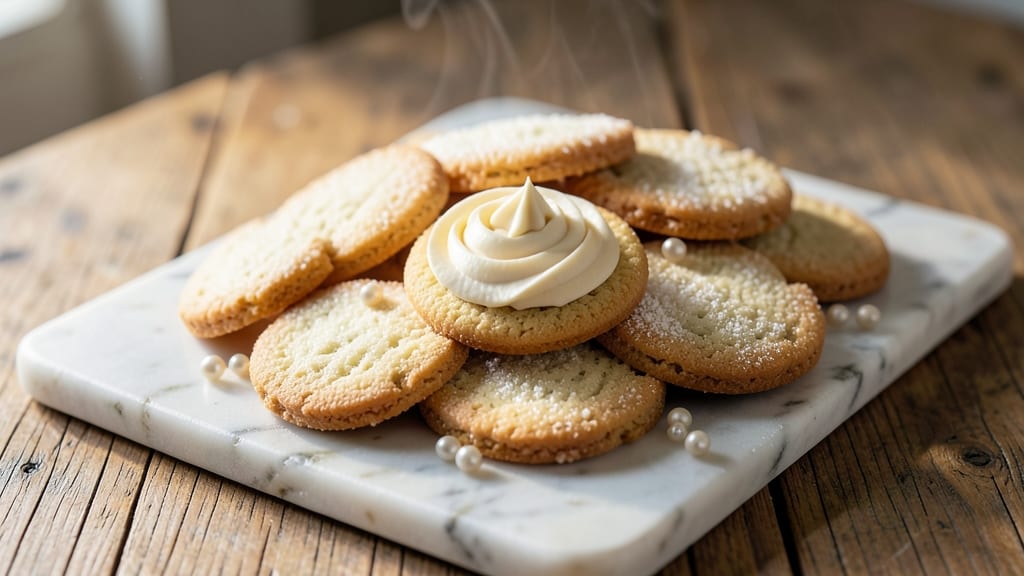
The Bakers Corner sugar cookie recipe delivers the perfect balance of crisp edges and tender centers, with vanilla bean streaks that make every bite feel like a holiday.
This isn’t your average sugar cookie—it’s a foolproof method that transforms simple ingredients into cookies with a foil-sealed crunch and a delicate vanilla aroma that lingers long after baking.
What sets this apart is the technique: chilling the dough just right and sealing the edges in foil to maintain that signature snap.
What makes this recipe special is its simplicity combined with professional results. You’ll need just 5 ingredients—butter, sugar, eggs, vanilla, and flour—plus a few pantry staples like baking powder and salt.
The dough is rolled, cut, and baked to a golden, caramelized finish, ensuring every cookie has that coveted texture. No fancy equipment required—just a rolling pin, cookie cutters, and a little patience for chilling.
By the time you pull these cookies from the oven, you’ll have perfectly shaped, crisp-edged treats with a tender center and those signature vanilla streaks running through. The foil-sealing trick guarantees they stay crispy, even when stacked in a jar for days.
These cookies are ideal for holidays, gifts, or a cozy afternoon treat—each bite is a testament to the care put into every step.
Whether you’re decorating them with royal icing or keeping them simple with a sprinkle of sugar, this recipe delivers restaurant-quality results at home. Let’s get baking—your kitchen will smell like holiday magic in no time.
Ingredients for bakers corner sugar cookie
Nine essential ingredients transform into restaurant-quality sugar cookies with signature foil-sealed crunch.
| Ingredient | Amount | Notes |
|---|---|---|
| Unsalted Butter 🧈 | 1 cup | Cold, cubed for even mixing |
| Granulated Sugar 🍚 | 2 cups | Superfine if available, sifted |
| Large Eggs 🥚 | 2 whole | Room temperature preferred |
| Pure Vanilla Extract 🌿 | 2 tbsp | Or 1 vanilla bean scraped |
| All-Purpose Flour 🌾 | 4 cups | Sifted, spooned not scooped |
| Baking Powder 🧂 | 1 tsp | Metal container preferred |
| Diamond Crystal Kosher Salt 🧂 | ½ tsp | Not table salt |
| Granulated Sugar (for rolling) 🍚 | 1 cup | Extra for garnish |
| Aluminum Foil 📄 | 1 sheet | Heavy-duty for sealing |
The butter quality makes or breaks these cookies. European-style unsalted butter like Plugrá or Miyoko's yields the best flavor and texture, but any high-fat (80%+) butter works. Keep it cold when mixing to prevent overdevelopment. The sugar should be sifted—superfine sugar dissolves more evenly, but regular granulated works if sifted thoroughly. For the vanilla, Madagascar bourbon vanilla adds depth, though pure extract is fine. Flour matters too—King Arthur or Gold Medal brands are ideal for consistent results. Measure flour by spooning into the cup and leveling off, never scooping directly from the bag.
No vanilla bean? Double the extract or use vanilla sugar at half the amount. Running short on baking powder? Baking soda plus cream of tartar at a 1:2 ratio works, but test your batch first. The salt must be kosher—Diamond Crystal measures differently than Morton. For the rolling sugar, turbinado or sanding sugar adds texture if you want extra crunch. Substitute the foil with a parchment-lined baking sheet if needed, though the foil creates that signature crisp edge. Chill the dough for at least 2 hours—this is non-negotiable for the perfect texture.
Store unbaked dough in the fridge for up to 3 days or freeze for 3 months by wrapping tightly in plastic. Baked cookies stay crisp for 5 days in an airtight container with parchment between layers. For long-term storage, freeze cookies on a tray first, then transfer to a bag with parchment—prevents sogginess. Reheat in a 350°F oven for 2-3 minutes to restore crispness. These cookies reheat beautifully, making them perfect for gift-giving—just wrap in cellophane with a ribbon.
Why You'll Love This Recipe
- No Mixer Needed: I swear by this recipe because it only calls for creaming butter and sugar by hand—no stand mixer, no fuss. The dough comes together in minutes, and honestly? The texture is better for it.
- Vanilla Kicks It Up: That pure vanilla extract makes all the difference—rich, warm, and not too sweet. The butter keeps them tender while the sugar gives just the right crunch, and I’ll be real: I’ve never had sugar cookies this consistently good.
- Holiday or Snack Attack: These work for Christmas cookie platters, school bake sales, or just a midweek craving. The dough chills perfectly, and I’ve even shaped them into snowflakes, stars, or just plain rounds—no judgment if you’re lazy like me.
- Dollar Stretch Magic: Five ingredients, zero specialty items. The butter and sugar do all the heavy lifting, and a single batch makes enough for gifts, parties, or my kids’ after-school snack stash. Leftovers? They freeze like a dream.
Step-by-step instructions for foil-sealed vanilla bean sugar cookies
Follow this precise method for cookies with a signature crunch and delicate vanilla streaks.
Cream Butter and Sugars to Peak Texture
In a stand mixer fitted with the paddle attachment, beat the cold, cubed unsalted butter on medium speed for 2-3 minutes until smooth and creamy. This cold start prevents overmixing while ensuring proper emulsification. Gradually add the 2 cups granulated sugar and continue beating for 3-4 minutes until the mixture is light, fluffy, and nearly doubles in volume.
You'll notice the color lighten to a pale yellow—this indicates proper aeration. Stop beating when the mixture leaves clean streaks on the paddle. Overmixing develops gluten, resulting in tough cookies. Scrape down the sides of the bowl with a silicone spatula to ensure even mixing of all ingredients.
Incorporate Eggs and Vanilla for Depth of Flavor
Add the 2 whole large eggs, one at a time, mixing on low speed for 30 seconds after each addition until fully incorporated. I prefer room-temperature eggs—they blend more smoothly and create a more tender crumb. Add the 2 tablespoons pure vanilla extract and mix for another 30 seconds until fully combined.
The vanilla extract should be evenly distributed throughout the dough. If using a vanilla bean, scrape the seeds directly into the mixture for visible streaks and intensified flavor. The dough should now be smooth, thick, and hold its shape when pressed between fingers.
Combine Dry Ingredients for Perfect Texture
In a separate bowl, whisk together the 4 cups all-purpose flour, 1 teaspoon baking powder, and 0.5 teaspoon diamond crystal kosher salt. Sift the flour mixture directly into the mixer bowl with the wet ingredients. Use the paddle attachment to mix on low speed for 30-45 seconds until just combined—you should still see small flour streaks.
Overmixing develops gluten, which makes cookies tough. Stop mixing as soon as the dry ingredients are evenly distributed. The dough will be slightly sticky but manageable. If it appears too dry, add 1-2 teaspoons of heavy cream to help bind it together.
Chill and Shape for Maximum Crispness
Divide the dough into 2 equal portions and flatten each into a 6-inch disk. Wrap each disk tightly with the 1 sheet aluminum foil and refrigerate for at least 2 hours or up to 24 hours. Chilling is critical—it allows the flour to fully hydrate and the butter to solidify, which prevents excessive spreading during baking.
When ready to bake, remove the dough from the refrigerator and let it sit at room temperature for 10-15 minutes before rolling. Preheat your oven to 350°F and line baking sheets with parchment paper. Roll the dough to 1/4-inch thickness and cut into desired shapes using cookie cutters.
Bake with Foil for Signature Crunch
Transfer the cut cookies to the prepared baking sheets, spacing them 2 inches apart to allow for spreading. Bake for 8-10 minutes until the edges are golden brown and the centers still appear slightly underbaked. The foil-wrapped method creates a signature crunch by trapping steam during the initial baking phase.
Remove the cookies from the oven and immediately roll each one in the 1 cup granulated sugar for rolling. Place them back on the baking sheet and return to the oven for 2-3 minutes to set the sugar coating. Allow the cookies to cool on the baking sheet for 5 minutes before transferring to a wire rack to cool completely.
Pro Tips For Making Bakers Corner Sugar Cookie
- Chill the Dough First: I learned this the hard way—skipping the 30-minute fridge rest makes the dough stick to your rolling pin and crack while cutting. Even if you’re impatient, give it a break. The cookies will hold their shape better, and you’ll thank yourself when they come out crisp-edged, not sad and flat.
- Use Room-Temp Butter: Cold butter from the fridge will give you tough, crumbly cookies. Let that butter sit out for 60-90 minutes until it’s soft but not melted—press your finger into it, and it should leave a slight indent. This ensures the right balance of tenderness and structure without overworking the dough.
- Don’t Overmix the Dough: Once you add the egg and vanilla, stop mixing the second the flour disappears. Overworking it develops gluten, and your cookies will turn out dense instead of light and crisp. Two turns with a spatula is all you need—no need to make it smooth like cake batter.
- Weigh Your Flour: Scooping flour from the bag packs it too tightly, and your cookies will be cakey instead of crisp. Use a kitchen scale for precise measurements—this recipe needs 2 ½ cups by weight (about 300g). If you must use cups, spoon the flour into the measuring cup and level it off with a knife. Trust me, this makes a real difference.
Regional styles of this bakers corner sugar cookie
New England Crunch
In New England, sugar cookies take center stage during winter holidays, where they’re often dusted with confectioners' sugar instead of rolled in granulated. The key trick here is adding ½ teaspoon lemon zest to the dough for a bright contrast to the vanilla.
Bake at 325°F for 10-12 minutes—the lower temperature creates a thicker, cake-like texture that’s perfect for stacking in tiered stands. 🍪
German Spritz Cookies
German bakeries often use anise extract (½ teaspoon) instead of vanilla, giving these cookies a licorice-like warmth that pairs beautifully with powdered sugar glaze. The dough is rolled slightly thinner (⅛-inch) and cut into stars or hearts.
Bake at 375°F for 6-8 minutes—the higher heat ensures a crisp edge while keeping the center tender. These are traditionally served during Christmas markets. 🌟
Southern Citrus Twist
Southern bakers elevate sugar cookies by adding 1 tablespoon orange zest and replacing half the vanilla with almond extract. The dough is rolled ¼-inch thick and cut into circles, then baked at 350°F for 9-10 minutes.
After baking, brush with a simple glaze made of powdered sugar + lemon juice for a glossy finish. These cookies are a staple at Southern holiday gatherings. 🍊
Midwest Classic Cutouts
The Midwest favors bold flavors and simple shapes, often using cinnamon sugar (mix 1 tbsp cinnamon + ½ cup sugar) for rolling instead of plain sugar. The dough is chilled 24 hours for extra crispness, then rolled ⅛-inch thick and cut into squares or rectangles.
Bake at 350°F for 8 minutes—perfect for sandwiching with cream cheese frosting. These are a nostalgic favorite at state fairs. 🎪
Pacific Northwest Spiced
West Coast bakers incorporate cardamom (½ teaspoon) and black pepper (¼ teaspoon) for a subtle warmth that complements the vanilla. The dough is rolled ⅛-inch thick and cut into wreaths or snowflakes, then baked at 325°F for 11-12 minutes.
After baking, sprinkle with crushed candy canes for a festive touch. These cookies are a hit at holiday cookie swaps. ❄️
Texas-Style Sandwich Cookies
In Texas, sugar cookies are often made into thin sandwich cookies with a peanut butter or vanilla buttercream filling. The dough is rolled ⅛-inch thick and baked at 375°F for 6-7 minutes to ensure crispness.
After cooling, cut into circles and sandwich with filling. These are a staple at Texas birthday parties and picnics. 🤝
Nutrition facts
Frequently asked questions
Why does this recipe use foil for sealing?
The foil creates a signature crisp edge by trapping steam during baking, which prevents the edges from softening. This technique ensures your cookies stay crunchy even when stored for days. The foil also helps maintain the perfect 1/4-inch thickness while baking.
Can I substitute butter with something else?
For best results, stick with unsalted butter, but you can use European-style butter (like Plugrá) for richer flavor. If needed, substitute with vegetable shortening (same weight), but the texture will be slightly less tender. Never use margarine—it lacks the fat content for proper cookie structure.
How do I prevent my cookies from spreading too much?
Chill the dough for at least 2 hours (or up to 24 hours) to firm up the butter. Use cold cookie cutters and place cutouts on baking sheets immediately. Bake at 350°F for 8-10 minutes—don’t overbake! The foil-sealing trick also helps maintain shape by controlling steam.
What’s the best way to store these cookies?
Keep them in an airtight container with parchment paper between layers to prevent sogginess. They’ll stay crisp for 5 days at room temperature or 3 months in the freezer. For extra crunch, reheat in a 350°F oven for 2-3 minutes before serving.
Can I make these cookies gluten-free?
Yes! Replace the all-purpose flour with a 1:1 gluten-free baking flour blend (like Bob’s Red Mill). Add 1/4 teaspoon xanthan gum to improve texture. Keep in mind the dough may be slightly crumbly, so handle it gently when rolling. Taste and adjust vanilla extract—some blends need extra flavor.