
Desserts
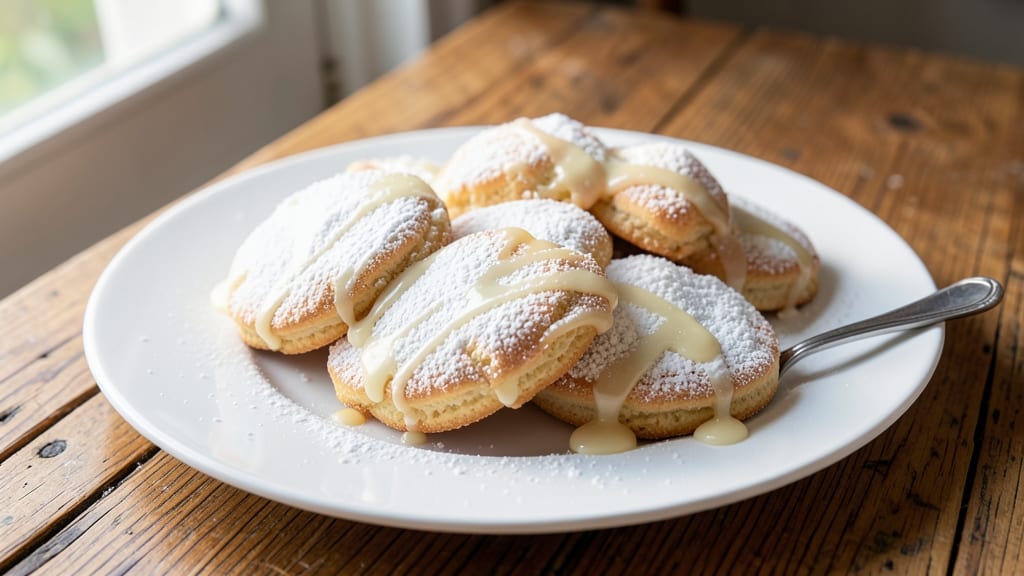
This Bavarian sugar cookie recipe delivers the perfect balance of tender crumb and buttery richness—with a secret technique that keeps the frosting piped high all day. 💛 The key lies in precise ingredient ratios and a gentle baking method that prevents over-spreading, while the vanilla bean frosting stays perfectly stiff for decorating.
The dough combines classic sugar cookie ingredients—flour, butter, and sugar—with a touch of almond extract for depth, creating a texture that's crisp at the edges yet tender inside. Baking at a moderate temperature ensures even cooking without losing that signature Bavarian melt-in-your-mouth quality.
The frosting, made with real vanilla bean and powdered sugar, stays firm enough to hold intricate piping designs.
What makes these cookies truly special is how they hold their shape and flavor for hours, making them ideal for holiday baking or special occasions. The frosting remains smooth and stable, allowing for elegant decorations that stay crisp even in warm rooms.
This recipe is designed to impress—whether you're baking for a family gathering or simply treating yourself.
Ready to master the art of Bavarian sugar cookies? The process is straightforward, with clear steps for achieving that signature texture and frosting consistency. Let's get started with a recipe that combines tradition with foolproof techniques for perfect results every time.
Ingredients for bavarian sugar cookie
Buttery richness meets vanilla elegance—these ingredients create cookies that stay crisp and beautifully piped.
| Ingredient | Amount | Notes |
|---|---|---|
| Unsalted Butter 🧈 | 1 cup | Cold, cubed for even texture |
| Granulated Sugar 🍚 | 1 ½ cups | Superfine preferred for smoothness |
| Powdered Sugar 🍚 | 1 ½ cups | For frosting, sifted |
| All-Purpose Flour 🌾 | 3 ½ cups | Sifted, spooned lightly |
| Large Eggs 🥚 | 2 whole | Room temperature |
| Pure Vanilla Extract 🌿 | 2 tsp | Or 1 vanilla bean scraped |
| Almond Extract 🌿 | ½ tsp | For depth of flavor |
| Baking Soda 🧂 | ½ tsp | Ensures lift |
| Salt 🧂 | ½ tsp | Fine sea salt preferred |
| Vanilla Bean Paste 🌿 | 2 tsp | For frosting richness |
| Heavy Cream 🥛 | ½ cup | Cold, for frosting stability |
| Vanilla Bean Seeds 🌿 | 1 tbsp | Scraped from 1 pod |
The butter makes or breaks these cookies. European-style unsalted butter (like Plugrá or Kerrygold) gives the best flavor, but any good brand works. Keep it cold when creaming to prevent overmixing. For the frosting, powdered sugar should be sifted to avoid graininess—Domino brand is my go-to. The vanilla bean paste adds depth beyond regular extract, but if you only have extract, double the amount. Almond extract is key for that authentic Bavarian flavor—don't skip it unless you're okay with a more basic taste.
No vanilla bean paste? Pure vanilla extract plus a pinch of vanilla sugar works in a pinch. Substituting almond extract? Amaretto liqueur at half the amount gives a similar depth. For the frosting, if heavy cream isn't available, whipped coconut cream creates a similar texture (though it won't be as stable). The frosting requires precise measurements—don't eyeball the powdered sugar. For a lighter frosting, add 1 extra tablespoon of heavy cream. And if your frosting feels too soft, chill it for 10 minutes before piping—this keeps it perfectly stiff for those elegant decorations.
Store cookie dough in an airtight container in the fridge for up to 3 days or freeze for 3 months. The frosting keeps well for 5 days refrigerated, but for best results, make it fresh. If you're prepping ahead, bake the cookies and store them in layers with parchment between them. They'll stay fresh for 1 week at room temperature. For the ultimate treat, freeze unbaked cookies on a tray, then transfer to a bag—bake straight from frozen for crisp edges and soft centers.
Why You'll Love This Recipe
- Butter-Soft Shortcut: I swear by this dough—just cream butter and sugar until fluffy, then fold in flour. No food processor, no fuss, and that cold butter magic keeps it tender without overworking. (Yes, even if I’m multitasking with a toddler on my hip.)
- Vanilla Sugar Rush: The combo of granulated and powdered sugar gives these cookies that signature Bavarian crunch and melt-in-your-mouth chew. Toss in a pinch of vanilla bean paste, and suddenly, you’ve got a cookie that tastes like a hug from a bakery in Munich.
- Party in a Box: Freeze the dough balls before baking—no one will guess they were prepped ahead. Perfect for holiday gifts, last-minute bake sales, or when your cousin “forgets” to bring dessert. (Pro tip: Sprinkle with flaky salt right after baking.)
- Budget Baking Win: Four ingredients, zero specialty items, and enough dough to feed a crowd for pennies. The eggs add richness, but you won’t cry over the cost when you’ve got 24 cookies for the price of one store-bought dozen. (Leftovers? They vanish faster than I can say “second batch.”)
Step-by-step instructions for Bavarian sugar cookies
Here's how to create tender cookies with a signature vanilla bean frosting that holds its shape perfectly.
👨🍳 Step 1: Cream Butter and Sugars Together
In a stand mixer fitted with the paddle attachment, beat the 1 cup Unsalted Butter (cold, cubed) with 1.5 cups Granulated Sugar on medium speed for 3-4 minutes. You'll know it's ready when the mixture is light, fluffy, and nearly doubles in volume. This creaming process incorporates air for that classic Bavarian texture.
I like to scrape down the sides of the bowl every 30 seconds to ensure even mixing. The butter should be fully incorporated but still slightly grainy—this prevents dense cookies. Add the 2 tsp Pure Vanilla Extract and 0.5 tsp Almond Extract now and mix for another 10 seconds to distribute the flavors evenly.
👨🍳 Step 2: Add Eggs and Dry Ingredients
Add the 2 whole Large Eggs (room temperature) one at a time, mixing on low speed for 30 seconds after each addition. The mixture will look slightly curdled at first, but don't worry—it will smooth out. In a separate bowl, whisk together the 3.5 cups All-Purpose Flour, 0.5 tsp Baking Soda, and 0.5 tsp Salt. Sift the flour mixture over the wet ingredients.
Mix on low speed for 30-45 seconds until just combined. You should still see small flour streaks—overmixing develops gluten, which makes cookies tough. Here's the thing—don't skip sifting the flour. It prevents lumps and ensures even baking. The dough will be soft and slightly sticky, but not wet.
🥘 Step 3: Shape and Chill the Dough
Turn the dough out onto a lightly floured surface and divide it into 4 equal portions. Roll each portion into a 1-inch thick log, about 8 inches long. Wrap each log tightly in plastic wrap and refrigerate for at least 2 hours (or up to 24 hours). Chilling prevents the cookies from spreading too much in the oven and enhances the vanilla flavor.
I press down gently on the dough logs during the first minute of chilling to compact them—this prevents them from curling during baking. The dough should feel firm but still pliable when you're ready to slice. If it feels too soft, return it to the fridge for another 30 minutes.
🔥 Step 4: Bake Until Golden Edges Form
Preheat your oven to 350°F. Line two baking sheets with parchment paper. Using a serrated knife, slice the chilled dough logs into ¼-inch thick rounds. Place them 2 inches apart on the prepared baking sheets. Bake for 10-12 minutes until the edges are golden brown but the centers still look slightly underdone.
Don't overbake—these cookies should be soft and tender inside. They'll firm up slightly as they cool. Let them cool on the baking sheets for 5 minutes before transferring to a wire rack. The reason we wait until the edges are golden is that this creates the perfect balance of crispy exterior and soft interior that Bavarian cookies are known for.
🍳 Step 5: Make the Vanilla Bean Frosting
In a medium bowl, beat the 1 cup Powdered Sugar, 2 tsp Vanilla Bean Paste, 0.5 cup Heavy Cream, and 1 tbsp Vanilla Bean Seeds with an electric mixer on high speed for 2-3 minutes until smooth and fluffy. The frosting should be thick enough to hold its shape when piped but still spreadable. If it's too stiff, add 1 teaspoon of milk at a time until it reaches the right consistency.
Here's where the magic happens: the vanilla bean paste and seeds create that signature Bavarian flavor. I like to add the seeds last so they distribute evenly throughout the frosting. The frosting should be cool before using—this helps it pipe high and stay stable. If you're in a hurry, chill the bowl in the freezer for 10 minutes before piping.
🥘 Step 6: Assemble and Decorate
Use a piping bag fitted with a star tip to pipe the frosting onto the cooled cookies. I like to pipe a 1-inch swirl on top of each cookie and then spread the remaining frosting around the edges with an offset spatula. This creates that classic Bavarian look with a smooth base and piped top.
Work quickly but carefully—vanilla bean frosting can melt in warm conditions. If you notice the frosting starting to soften, chill the cookies for 10 minutes before continuing. Let the decorated cookies sit at room temperature for 30 minutes before serving to allow the frosting to set completely. This ensures your cookies stay perfectly shaped and delicious for hours.
Pro Tips For Making Bavarian Sugar Cookie
- Cream Butter and Sugar Slowly: Don’t rush the butter-sugar mix—beat it on medium for 3-4 minutes until it’s pale and thick. I learned this the hard way: rushing it leaves cookies dense and greasy. The butter needs time to fully emulsify with the sugar, or you’ll end up with a sad, flat cookie.
- Chill Dough Twice: Rest the dough for 2 hours in the fridge then roll and cut. After shaping, freeze the cookies for 15 minutes before baking. The first chill firms up the dough for easier handling, while the second prevents spreading. Skimp on this, and you’ll get lopsided, cracked cookies.
- Use Cold Powdered Sugar: Store your powdered sugar in the freezer for 30 minutes before measuring—it packs tighter, so you’ll get the exact 1 cup called for. Warm powdered sugar compresses, leading to cookies that taste like they’re drowning in sugar. Trust me, your cookies will be perfectly balanced.
- Rotate the Pan: Swap the baking sheets halfway through—front to back, not side to side. Bavarian cookies bake unevenly if one side gets too hot. A quick rotation guarantees even golden-brown edges on every batch. (Yes, even if you’re impatient like me.)
Storing and reheating your bavarian sugar cookie
Room Temperature Storage
Store baked Bavarian sugar cookies in an airtight container with parchment paper between layers to maintain freshness. At room temperature, they'll stay crisp and flavorful for up to 5 days.
The frosting stays perfectly piped and stable in a cool (not cold) spot—avoid direct sunlight or warm areas like near the oven. For best results, place them in a linen-lined box to protect the delicate decorations. 💛
Refrigerator Storage
If you're prepping ahead, refrigerate unbaked dough logs for up to 3 days or baked cookies for 7 days. The frosting keeps well in the fridge for 5 days—just bring it to room temperature before piping.
I wrap individual cookies in parchment paper before storing to prevent sticking. For softness, let cookies sit at room temperature for 15 minutes before serving after refrigeration. The cold air can make them slightly firmer.
Freezer Storage
Freeze unbaked dough logs for 3 months by wrapping tightly in plastic wrap and placing in a freezer bag. Thaw in the fridge overnight before slicing and baking. For baked cookies, freeze them unfrosted on a tray first, then transfer to a bag.
Reheat in a 350°F oven for 3-5 minutes to restore freshness before adding frosting. The frosting can also be frozen for 2 months—thaw in the fridge before using. 🥶
Reheating Tips
If your cookies lose crispness, reheat them in a 350°F oven for 2-3 minutes to restore texture. Place them on a baking sheet and warm just until edges are slightly crisp again. For frosting that's softened, chill the cookies for 10 minutes in the fridge before serving.
Never microwave—it makes the frosting melt unevenly and lose its piped shape. The key is low heat and quick timing to revive without overcooking.
Frosting Refresh
If your frosting looks dry after storage, add 1 teaspoon of heavy cream and mix until smooth. For softened frosting, chill the bowl for 10 minutes before piping. The frosting should be cool but not cold when applied—this ensures it holds its shape.
If you're decorating again after storage, let the cookies sit at room temperature for 15 minutes first. This helps the frosting adhere better and prevents melting during decoration. ✨
Nutrition facts
Frequently asked questions
Why does this recipe use almond extract?
The 0.5 tsp almond extract adds a subtle nutty depth that enhances the vanilla flavor—this is a signature element in traditional Bavarian cookies. It gives the cookies a more complex, aromatic profile that sets them apart from basic vanilla sugar cookies. Without it, the flavor would be more one-dimensional.
Can I substitute vanilla bean paste with regular extract?
Yes, but you'll need to adjust the amount. Use 2 tsp pure vanilla extract plus a pinch of vanilla sugar for the frosting. The paste provides more intense vanilla flavor and visible specks, but regular extract works well for a similar taste. For the dough, just use the 2 tsp vanilla extract called for in the recipe.
How do I prevent my cookies from spreading too much?
Chilling the dough logs for at least 2 hours is critical—this firms up the butter and prevents excessive spreading. Also, slice the dough ¼-inch thick and place cookies 2 inches apart on the baking sheet. Bake at 350°F for 10-12 minutes until just golden at the edges, not longer.
What's the secret to keeping the frosting piped high?
Use cold heavy cream and chill the frosting for 10 minutes before piping. The powdered sugar must be sifted to avoid lumps, and the frosting should be cool but not cold when applied. Avoid warm environments while decorating—this keeps the frosting perfectly stiff for those elegant swirls.
Can I make these cookies gluten-free?
Yes, but you'll need a 1:1 gluten-free flour blend. Replace the all-purpose flour with 3.5 cups gluten-free flour plus 0.5 tsp xanthan gum (if not included in your blend). The texture will be slightly different—expect cookies that are more delicate. Chill the dough longer (3 hours) to compensate for the lack of gluten structure.