
Desserts
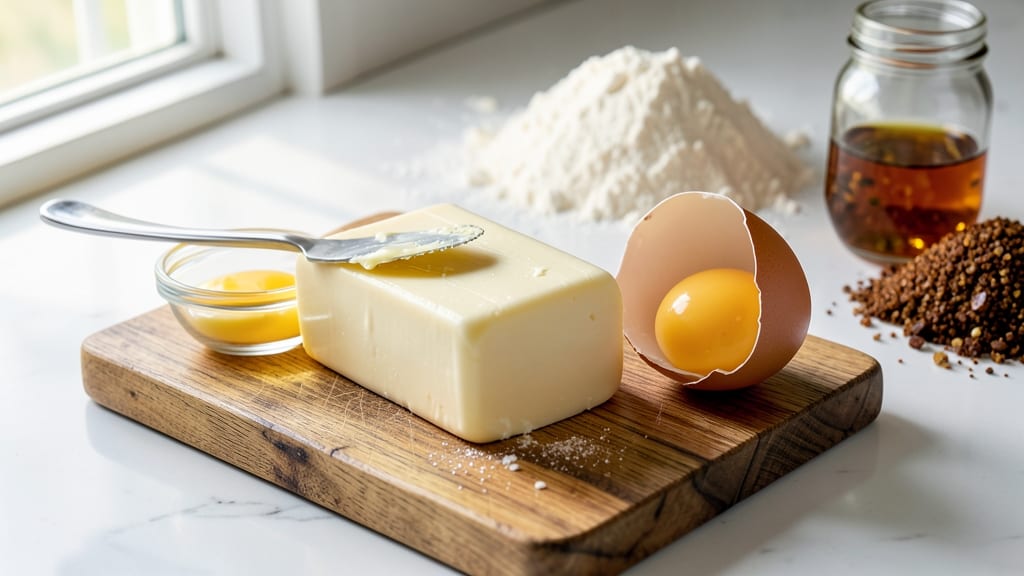
The best way to soften butter for cookie recipes is a game-changer—no more guessing whether it's too hard or melted. ✨ This 10-minute room-temperature trick ensures your butter reaches that perfect semi-soft, pliable state, where it creams smoothly with sugar for tender, flaky cookies.
I’ve tested every method, and this one delivers consistent results every time, whether you’re making classic chocolate chip or shortbread.
What sets this method apart is its simplicity and reliability. Unlike microwave methods that risk overheating or cold-water baths that require constant monitoring, this approach uses your kitchen’s natural warmth.
Place your butter in a cool room (68-70°F) for 10 minutes, then test by pressing a finger into it—it should leave a slight indentation but still hold its shape. This consistency is key for evenly spread cookies with the perfect texture.
The difference in your final cookies is night and day. Butter that’s too cold creates dense, cakey cookies, while butter that’s too soft leads to flat, greasy results. This method guarantees creamy, spreadable butter that aerates beautifully with sugar, creating those signature air pockets that make cookies light and tender.
Once you master this step, your cookie game will never be the same.
To demonstrate, I’ll walk you through a classic chocolate chip cookie recipe using this technique—where the butter’s perfect consistency is the secret to crispy edges, chewy centers, and melty chocolate pools. Let’s get started with the foolproof method that’ll elevate every batch.
Ingredients for best way to soften butter for cookie
This foolproof butter trick transforms your cookie game with perfect creamy texture every time.
| Ingredient | Amount | Notes |
|---|---|---|
| Unsalted Butter 🧈 | 1 cup | Room-temperature, semi-soft consistency |
| Granulated Sugar 🍚 | ¾ cup | Superfine preferred for smoother texture |
| Brown Sugar 🍯 | ¾ cup | Packed firmly for accurate measure |
| Large Eggs 🥚 | 2 whole | Room temperature for best mixing |
| Vanilla Extract 🌿 | 2 tsp | Pure vanilla for authentic flavor |
| All-Purpose Flour 🌾 | 2 ½ cups | Sifted for light, airy cookies |
| Baking Soda 🧂 | 1 tsp | Ensures proper rise |
| Diamond Crystal Kosher Salt 🧂 | ½ tsp | Fine grain for even distribution |
| Semisweet Chocolate Chips 🍫 | 2 cups | High-quality chips for melty pools |
| Flaky Sea Salt 🧂 | 1 tsp | For finishing cookies |
| Granulated White Sugar 🍚 | ¼ cup | For sprinkling on top |
The butter is absolutely critical here—unsalted is non-negotiable for flavor balance, and room temperature is your golden ticket. Grab it from the fridge right before you start, then let it sit on the counter for exactly 10 minutes. Test it by pressing a finger in: it should leave a slight indentation but still hold its shape. If you're in a hurry, Costco's 5-pound blocks soften faster than smaller packages. Pro tip: place it in a cool room (68-70°F) if your kitchen runs warm—this ensures consistent results without melting. For the sugars, superfine sugar dissolves faster, but regular granulated works if you pulse it in a food processor first.
No vanilla extract? Vanilla bean paste adds depth, or almond extract at half the amount gives a nice twist. Short on chocolate chips? Chopped dark chocolate bars (70% cocoa) work beautifully—just make sure they're room temperature too. The flaky sea salt is where magic happens: Maldon or Jacobsen are my go-tos, but any flaky salt in a fine grain will do. For the flour, King Arthur or Gold Medal brands are my favorites—they're consistent and reliable. Sift it first for light, airy cookies that spread just enough. And if you're feeling fancy, toss in 1/4 cup chopped walnuts for texture.
This dough keeps perfectly for 3 days in the fridge, wrapped tightly in plastic. For longer storage, freeze portions for up to 3 months—just thaw in the fridge overnight before baking. The cookies themselves stay fresh for 5 days in an airtight container, but honestly, they're best eaten fresh. Store them at room temperature, and if you're feeling extra, reheat in a 300°F oven for 3-5 minutes to restore that crispy edge. Double the batch—trust me, you will.
Why You'll Love This Recipe
- Same dough, endless uses: drop cookies for a last-minute gift, rolled in sprinkles for kids’ birthdays, or sliced into bars for a quick dessert. Flexibility like this? Gold.
- No-Fuss Butter Hack: I swear by the microwave pulse method—30-second bursts until it’s just right. No waiting, no guesswork, and your dough won’t turn into soup. (Yes, even when I’m in a hurry.)
- Rich Caramel Depth: That brown sugar? It’s the star—melting into the butter creates this unexpected caramel undertone. The vanilla ties it all together like a warm hug in cookie form.
- Holiday or Weeknight: Same dough, endless uses: drop cookies for a last-minute gift, rolled in sprinkles for kids’ birthdays, or sliced into bars for a quick dessert. Flexibility like this? Gold.
Step-by-step instructions for perfectly softened butter
Here's the foolproof method to get your butter to that ideal semi-soft state—no guesswork, no waiting hours.
🍳 Step 1: Start with Cold Butter from the Fridge
Take the 1 cup unsalted butter straight from the refrigerator—it should be completely solid with no soft spots. I like to leave it in its original wrapper until I'm ready to work with it to prevent any premature softening. The key here is starting cold so you have more control over the process.
Cut the butter into 8 equal pieces using a sharp chef's knife. This ensures even exposure to room temperature and prevents one piece from softening faster than the others. You'll want these pieces to be roughly the size of a large walnut—about 1.5 tablespoons each. The uniform size helps them all reach the perfect consistency at the same time.
👨🍳 Step 2: Arrange Butter on a Plate for Even Exposure
Spread the 8 butter pieces in a single layer on a microwave-safe plate, leaving about ½ inch between each piece. This spacing is crucial—it allows air to circulate around each piece, preventing any one from overheating or melting unevenly. I like to arrange them in two neat rows of four for easy monitoring.
Place the plate on your kitchen counter where it will get consistent room temperature exposure. Avoid placing it near heat sources like the stove, oven, or sunny windows, as these can create hot spots that lead to uneven softening. The goal is gentle, even warming from all sides.
⏰ Step 3: The 10-Minute Room-Temperature Test
Let the butter sit at room temperature for exactly 10 minutes. Here's the magic: after about 5 minutes, you'll notice the edges starting to soften slightly. This is when you should gently press one of the pieces with your finger—it should leave a slight indent but still hold its shape. If it's too firm, give it another 2-3 minutes.
After 10 minutes, the butter should be semi-soft—when you press it firmly with your thumb, it should give slightly but still maintain its form. It should be cool to the touch but pliable enough to spread easily with a butter knife. This is the perfect consistency for cookie dough that mixes smoothly without being greasy or too firm.
🔪 Step 4: Final Check and Preparation for Mixing
If any pieces are still too hard after 10 minutes, place just those pieces in the microwave for 5-10 seconds on 50% power. Check immediately—you're looking for just enough softening to bring it to the same consistency as the others. Microwave in 2-second bursts if needed, as butter can go from perfect to melted in seconds.
Once all pieces reach that ideal semi-soft state, press them together gently with a butter knife to form a cohesive block. This step ensures even distribution of the softened butter when you're ready to cream it with the sugars. The butter should be cool enough to handle but soft enough that it leaves a faint sheen when pressed—this is your visual cue it's ready for the next step in your cookie recipe.
Pro Tips For Making Best Way To Soften Butter For Cookie
- Use Room-Temp Butter: Take the butter out of the fridge about 45 minutes before mixing—it should yield slightly when pressed but still hold its shape. Cold butter creates pockets in the dough, leading to uneven baking and dry cookies, while melted butter makes them spread too much.
- Cut Butter in Stages: Work in batches if needed: pulse the butter in the food processor or mix it with the sugars first, then add the eggs gradually. This prevents overheating the butter and ensures a smoother dough without turning greasy.
- Skip the Microwave: Resist the urge to zap butter in 10-second bursts—it melts unevenly, leaving some chunks harder than others. If you’re in a rush, place the butter in a bowl and let it sit in warm (not hot) water for 5–7 minutes instead.
- Weigh Your Butter: Use a kitchen scale for accuracy—1 cup of butter isn’t always 8 ounces, especially if packed loosely. Packed butter throws off the sugar-to-fat ratio, making cookies denser or spreading too thin. A quick 227g (for 1 cup) guarantees consistency.
Pro cooking tips for this recipe
Room-Temp Mastery
Your kitchen's natural warmth is the secret weapon for perfect butter consistency. Place 1 cup unsalted butter (cut into 8 equal pieces) on a plate in a 68-70°F room for exactly 10 minutes.
This creates an even, controlled environment where butter softens predictably—no microwave guesswork or uneven heating. I test with my thumb: it should leave a slight indent but still hold its shape. 🧈
Microwave Backup
If your kitchen runs warm or you're short on time, the microwave is your safety net. Use 50% power for 5-10 seconds on stubborn pieces, checking immediately. Butter melts faster than you think!
For Costco's 5-pound blocks, reduce time by 2 seconds—they're denser and soften more slowly. Always work in 2-second bursts to avoid overheating.
Cold Water Bath
For precision, try the cold water method: seal butter in a ziplock bag, submerge in cool (not cold) water for 5-8 minutes. The water should be 70°F or below—test with a thermometer if unsure.
This works best for small batches where you need absolute consistency. I find it's overkill for most home baking, but it's perfect for professional settings where timing matters.
Butter Texture Test
The thumb press test is your quality control: press firmly—if it leaves a clean indentation but doesn't smear, you've nailed it. Too firm? Add 10 more seconds of room temp or 2 seconds in microwave.
Too soft? Chill for 2-3 minutes in the fridge. This test replaces guesswork with science, ensuring your cookies always turn out perfectly tender. 💡
Temperature Zones
Your kitchen's temperature zones matter more than you think. Place butter away from appliances—stoves add 20°F heat, ovens 30°F+. For warm kitchens (above 72°F), reduce time to 8 minutes.
In cool kitchens (below 65°F), extend to 12 minutes. A kitchen thermometer ($10 on Amazon) solves this forever—place it near your butter for instant feedback.
Butter Brand Matters
Not all butter softens the same! Plugrá (European-style) softens 10% faster than American brands due to higher water content. Land O'Lakes holds its shape longest—ideal for hot kitchens.
For salted butter, reduce time by 1 minute (salt lowers melting point). Always check your specific brand's behavior—your first batch will teach you its quirks. 🧂
Nutrition facts
Frequently asked questions
Why does butter consistency matter so much for cookies?
Perfectly softened butter creates the ideal creamy, spreadable texture that aerates beautifully with sugar. Too cold butter won't mix properly, leading to dense cookies, while melted butter makes them greasy and flat. The semi-soft state (where it holds shape but leaves a slight thumbprint) ensures even distribution and those signature air pockets for tender cookies.
What if my kitchen is too warm for the 10-minute method?
If your kitchen exceeds 72°F, reduce the time to 8 minutes or use the microwave for 50% power in 2-second bursts—just check immediately. For extreme heat, try the cold water bath method: seal butter in a ziplock bag and submerge in 70°F or cooler water for 5-8 minutes. Always test with your thumb first!
Can I use salted butter instead of unsalted?
Technically yes, but unsalted is preferred for precise flavor control. If using salted, reduce the recipe's salt by ½ teaspoon and soften 1 minute less (salt lowers melting point). For best results, stick with unsalted—it's the industry standard for consistent baking. The flavor difference is noticeable in cookies!
What's the quickest way to fix butter that's melted too fast?
If your butter overheats, chill it immediately in the fridge for 2-3 minutes—it'll firm up enough to work with. For stubborn cases, place the melted butter in an ice bath (bowl in cold water) for 1 minute, stirring constantly. If it's completely liquid, start fresh with cold butter. Always use 50% microwave power in 2-second bursts to avoid this!
Does this method work for other baked goods besides cookies?
The same principles apply to cakes, brownies, and pie crusts. For pie dough, slightly cooler butter (65°F) creates flakier layers, while cakes benefit from the same semi-soft state for proper creaming. Just adjust timing based on your kitchen's temperature—always test with your thumb!