
Desserts
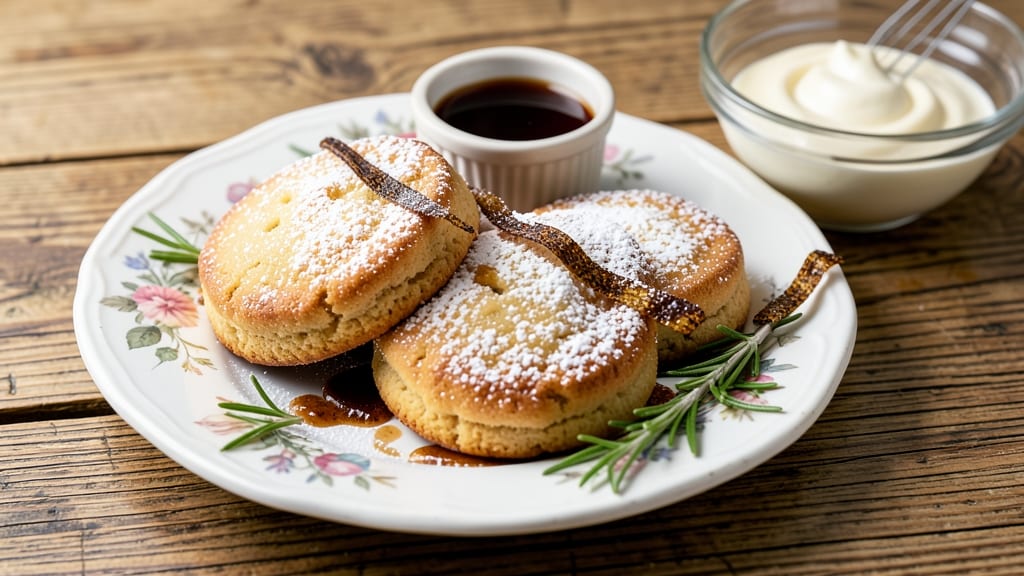
This British sugar cookie recipe delivers a nostalgic blend of warm spices, molasses depth, and tender vanilla streaks that taste like a cozy afternoon in a British tea shop. 🍯 The secret lies in the perfect balance of brown sugar for chewiness and a touch of baking soda for that signature crunch.
Unlike American sugar cookies, these have a subtle molasses richness that pairs beautifully with a cup of Earl Grey.
What sets these apart is the spiced molasses dough that develops deep flavor as it bakes, while the vanilla streaks add delicate sweetness that cuts through the molasses intensity.
The recipe uses just 6 ingredients—butter, sugar, flour, baking soda, molasses, and vanilla—plus a simple citrus glaze for that classic British shine. No fancy equipment needed beyond a rolling pin and cookie cutters.
The result is cookies with a tender yet slightly crisp edge, perfect for tea time or holiday gifting. The molasses gives them a caramelized aroma that fills your kitchen, while the vanilla streaks create beautiful marbled patterns.
These aren't just cookies—they're a taste of British baking tradition with a modern twist.
For extra elegance, brush with lemon glaze or dust with powdered sugar. The dough keeps well for 3 days in the fridge, making these ideal for batch baking. Let's create cookies that taste like home.
Ingredients for british sugar cookie
Six core ingredients plus a few bright touches create these nostalgic British cookies.
| Ingredient | Amount | Notes |
|---|---|---|
| Unsalted Butter 🧈 | 1 cup | Cold and cubed for even baking |
| Light Brown Sugar 🍚 | 1 ½ cups | Packed for accurate measurement |
| All-Purpose Flour 🌾 | 3 ½ cups | Sifted for lighter texture |
| Baking Soda 🧂 | 1 tsp | Pure baking soda, not baking powder |
| Molasses 🍯 | ½ cup | Unsulphured for authentic flavor |
| Pure Vanilla Extract 🌿 | 1 tbsp | High-quality, no imitation |
| Lemon Zest 🍋 | 1 tbsp | Freshly grated for bright flavor |
| Lemon Juice 🍋 | 1 tbsp | Freshly squeezed for glaze |
| Powdered Sugar 🍚 | 1 cup | For glaze and dusting |
| Ground Cinnamon 🌶️ | ½ tsp | Freshly ground for warmth |
| Ground Ginger 🌿 | ¼ tsp | Freshly ground for spice |
| Ground Cloves 🌶️ | ⅛ tsp | Lightly toasted for depth |
| Salt 🧂 | ½ tsp | Fine sea salt preferred |
The butter and brown sugar are your foundation—use European-style butter if you can find it, like Plugrá or Bergère, for richer flavor. Light brown sugar ensures just enough molasses depth without overpowering. For molasses, unsulphured is key—it’s the traditional choice for British baking. If your local store doesn’t carry it, Trader Joe’s or specialty grocers like Whole Foods usually stock it. The vanilla extract should be pure bourbon or Madagascar vanilla—no imitation extracts here. For the spices, freshly ground cinnamon and ginger make all the difference, so if you’re buying whole spices, toast them lightly in a dry pan first.
No unsulphured molasses? Regular molasses works in a pinch, but reduce the amount to 0.375 cup—it’s stronger. Running short on vanilla? Almond extract at half the amount adds a nice floral note. The lemon zest can be swapped for orange zest if you prefer, but lemon’s brightness cuts through the molasses perfectly. For the glaze, if you don’t have powdered sugar, confectioners’ sugar is the same thing—just make sure it’s finely ground. The dough will keep for 3 days in the fridge, so make a double batch if you’re gifting these. The spices? If you’re not comfortable grinding them yourself, Penzeys sells pre-ground spice blends that are restaurant-quality.
The dough stays fresh for 3 days in an airtight container in the fridge—perfect for batch baking. For longer storage, wrap tightly in plastic and freeze for up to 3 months. Once baked, the cookies keep their crunch for 5 days in a tin at room temperature. The glaze sets quickly, so brush it on right after baking. For extra elegance, dust with powdered sugar right before serving. These cookies reheat beautifully—just 5 seconds in the microwave restores that fresh-from-the-oven warmth.
Why You'll Love This Recipe
- No-Fuss Mixing: I swear by this recipe because it’s just three bowls—cream butter and sugar, toss dry stuff, then fold. No food processor, no weird ratios, just good old-fashioned stirring. Even my 10-year-old could handle it (and did, proudly).
- Molasses Magic: That little splash of molasses? It’s the secret weapon—deep, caramelized warmth that cuts through the buttery sweetness. Honestly, it’s the kind of flavor that makes you go back for a third cookie before you even finish the first.
- Holiday or Snack Attack: These cookies freeze like champs—perfect for gifting or stashing in the freezer for lazy weeknights. I’ve sent them in tins to friends for Christmas, and they’ve been my go-to for movie nights when I’m too tired to bake.
- Dollar Stretch: Brown sugar and butter are cheap, flour’s a pantry staple, and molasses lasts forever. Between us, this recipe costs me about $0.15 per cookie—way better than store-bought, and none of that sad, dry texture. Win.
Step-by-step instructions for spiced molasses cookies
Here's the method for achieving that perfect British-style crunch with warm molasses depth.
👨🍳 Step 1: Cream Butter and Sugars Together
In a stand mixer fitted with the paddle attachment, beat the 1 cup unsalted butter (cold and cubed) with the 1.5 cups light brown sugar on medium speed for 3-4 minutes. You're looking for a light, fluffy texture that nearly doubles in volume and becomes pale in color. This creaming process incorporates air, which creates those signature crackly tops.
I press down on the butter cubes with a spatula during the first minute to ensure even incorporation. If the mixture looks too soft or melts completely, chill the bowl in the freezer for 5 minutes before continuing. The butter should hold its shape when pressed but still be soft enough to mix smoothly.
👨🍳 Step 2: Add Molasses and Wet Ingredients
Reduce the mixer speed to low and add the 0.5 cup molasses, 1 tbsp pure vanilla extract, 1 tbsp lemon zest, and 1 tbsp lemon juice. Mix for 1-2 minutes until fully combined. The molasses will darken the mixture, but don't worry—this is exactly what we want for that authentic British flavor profile.
Here's the thing—molasses is thick and sticky. Scrape down the sides of the bowl with a silicone spatula every 30 seconds to ensure even distribution. The mixture should be smooth with no visible streaks of molasses. If it looks too thick, add 1-2 teaspoons of water to help it come together properly.
👨🍳 Step 3: Combine Dry Ingredients
In a separate bowl, whisk together the 3.5 cups all-purpose flour, 1 tsp baking soda, 0.5 tsp salt, 0.5 tsp ground cinnamon, 0.25 tsp ground ginger, and 0.125 tsp ground cloves. Sift the flour mixture directly into the wet ingredients while the mixer runs on low speed. This prevents gluten development and keeps the cookies tender.
Mix just until combined—about 30-45 seconds. You should still see some flour streaks in the mixture. Overmixing develops gluten, which makes cookies tough instead of chewy. If the dough feels too sticky, chill it in the refrigerator for 15-20 minutes before proceeding.
⏰ Step 4: Chill and Prepare Dough
Divide the dough into two equal portions and flatten each into a ½-inch thick disk. Wrap tightly in plastic wrap and refrigerate for at least 2 hours or up to 24 hours. Chilling is crucial—it firms up the butter, prevents excessive spreading, and allows the flavors to meld.
I like to press the dough disks against the plastic wrap to create even thickness. This ensures uniform baking and prevents any one cookie from being thicker (and therefore undercooked) than its neighbors. If you're short on time, freeze the dough disks for 30 minutes before rolling and cutting.
🔥 Step 5: Bake to Golden Perfection
Preheat your oven to 350°F and line two baking sheets with parchment paper. On a lightly floured surface, roll out one dough disk to ¼-inch thickness. Use a 2-inch round cutter to cut out cookies, then reroll the scraps and cut more cookies. Place them 2 inches apart on the prepared baking sheets.
Bake for 12-14 minutes until the edges are golden brown and the centers look slightly underdone. They'll continue cooking on the hot pan after removal. Watch closely after 10 minutes—ovens vary, and you want that perfect balance between crispy edges and a soft center. Rotate the baking sheets halfway through for even baking.
🍽️ Step 6: Glaze and Finish
While the cookies are still warm, whisk together the 1 cup powdered sugar with 1-2 tbsp lemon juice (from the original amount) until smooth. Transfer cookies to a wire rack and drizzle the glaze over the top. Let the glaze set for 5 minutes before serving.
The glaze should be thick enough to hold its shape but still glossy. If it's too runny, add more powdered sugar. These cookies are best enjoyed warm with a cup of tea—each bite delivers that perfect crunch with warm molasses and spice notes, finished with a bright citrus glaze.
Pro Tips For Making British Sugar Cookie
- CHILL THE DOUGH: I learned this the hard way—rolling out warm dough for British sugar cookies leads to sad, spread-out cookies. Pop the dough between two sheets of parchment in the fridge for at least 30 minutes (or up to 24 hours if you’re prepping ahead). This keeps the molasses from making your cookies turn into pancakes.
- CREAM THE BUTTER DRY: Your butter should be cold but soft enough to press with a fork, not crumbly. If it’s too soft, chill the bowl for 10 minutes before mixing—this prevents cookies from spreading and ensures that rich, buttery flavor stays put. (Yes, even if you’re impatient like me.)
- WEIGH THE FLOUR: Scooping flour from the bag packs it down, and packed flour = dense cookies. Use a kitchen scale for precision (250g for most recipes) or spoon it lightly into a measuring cup, then level off. Too much flour makes these cookies tough, and we’re going for tender, chewy perfection here.
- BROWN THE SUGAR FIRST: Light brown sugar can be inconsistent—some bags are lighter than others. Toast it in a dry skillet over medium heat for 2-3 minutes until it smells caramelized. This deepens the molasses flavor and gives your cookies that classic British depth. (Skip this, and your cookies will taste flat.)
Troubleshooting perfect results
Dough Too Sticky
If your dough feels too sticky to handle, don’t panic—this is actually common with molasses and high butter content. First, try chilling the dough for an additional 15-20 minutes in the fridge.
If it’s still too soft, dust your work surface with 1-2 tablespoons of all-purpose flour and use a lightly floured rolling pin. For extra insurance, I keep a bowl of flour nearby to dip my rolling pin in between rolls. 🧈
Cookies Spread Too Much
Over-spreading usually means your butter wasn’t chilled enough. To fix this, make sure your dough disks are properly chilled for at least 2 hours before rolling. If you’re in a hurry, freeze the dough for 30 minutes before cutting.
Also, use a 2-inch round cutter and place cookies 2 inches apart on the baking sheet. For next time, try rolling the dough slightly thinner (¼-inch) to prevent excessive spreading.
Molasses Flavor Too Strong
The molasses should add depth, not overpower. If your cookies taste too intense, reduce the molasses to 0.375 cup next time. For a milder flavor, add 1 extra teaspoon of vanilla extract or 1 extra tablespoon of lemon juice to balance it out.
The lemon zest also brightens the flavor—don’t skip it! If you’re using regular molasses (not unsulphured), reduce it by 1 tablespoon since it’s stronger.
Cookies Too Dense
Dense cookies often result from overmixing the dough or using too much flour. Mix the dry ingredients just until combined—about 30-45 seconds—and avoid overworking the dough. If your dough feels too dry, add 1 teaspoon of water or milk at a time until it comes together.
Also, make sure your butter is cold but still soft enough to mix smoothly. If you’ve already baked them, try reheating for 5-10 seconds in the microwave to restore some moisture.
Glaze Too Thin or Thick
For a perfect glaze consistency, start with 1 cup powdered sugar and 1 tablespoon lemon juice. Adjust as needed: if it’s too runny, add more powdered sugar (1 tablespoon at a time); if it’s too thick, add ½ teaspoon of water.
The glaze should coat the back of a spoon but still drizzle smoothly. If you’re in a rush, you can also use royal icing (3 parts powdered sugar to 1 part meringue powder + water) for a sturdier finish. ✨
Uneven Baking
If your cookies bake unevenly, it’s likely due to oven temperature fluctuations. Rotate your baking sheets halfway through baking and avoid opening the oven door too early. For even browning, place one baking sheet on the top rack and one on the middle rack.
If your oven runs hot, reduce the temperature to 340°F and bake for 15-16 minutes. Always use an oven thermometer to ensure accuracy—many home ovens are off by 25°F or more.
Nutrition facts
Frequently asked questions
Can I make these without molasses?
Yes! If you can't find unsulphured molasses, reduce regular molasses to 0.375 cup and add 1 extra teaspoon of vanilla extract for balance. For a completely molasses-free version, replace it with 0.5 cup honey or 0.5 cup dark corn syrup—though the flavor will be slightly different. The spiced character will still shine through.
How do I store leftover cookies?
Keep them fresh in an airtight container for 5 days at room temperature. For longer storage, freeze the baked cookies for up to 3 months. To reheat, microwave for 5-10 seconds to restore that warm-from-the-oven texture. The glaze stays crisp, so no need to worry about sogginess.
Can I use these cookies for gifting?
These make stunning gifts—wrap them in cellophane with a lemon glaze drizzle on top for a professional touch. The dough keeps for 3 days in the fridge, so you can prep ahead. Package them in clear boxes with a ribbon for a tea-time treat that feels special. Add a tag with the recipe for an extra thoughtful touch.
What shapes work best for these?
Traditional British sugar cookies shine as rounds or squares, but