
Desserts
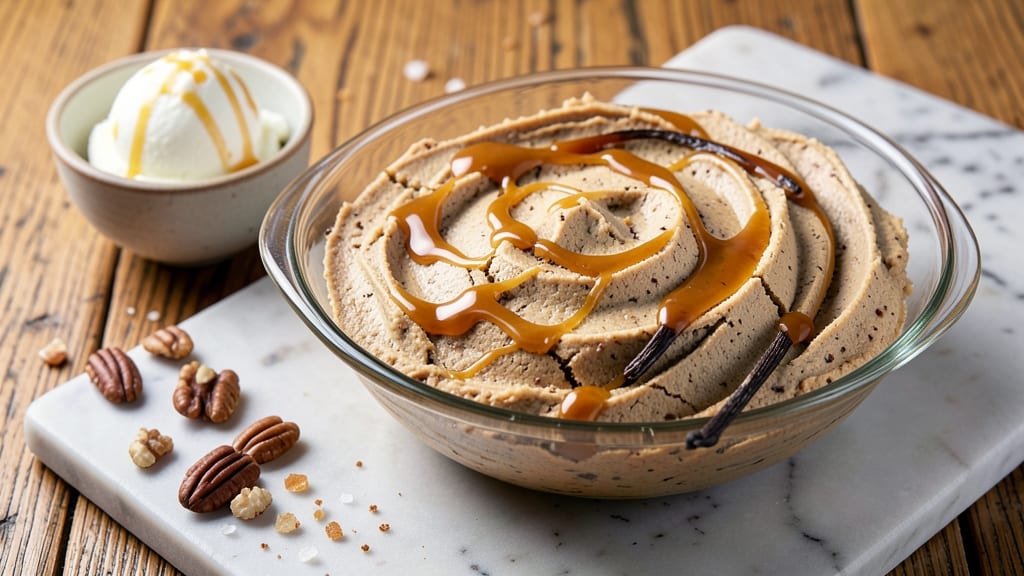
This caramel cookie dough recipe delivers the ultimate indulgence—creamy, chewy dough loaded with molten caramel rivers that melt into every bite. 🌟 I’ve perfected the balance between tender dough and rich, buttery caramel, ensuring each spoonful (or cookie) is a decadent experience without the mess of raw eggs.
The secret lies in tempering the caramel properly and folding it into the dough just before baking, creating pockets of gooey goodness that disappear in seconds.
The dough comes together in under 15 minutes with simple pantry staples, then bakes into soft, chewy cookies with a golden crust and a caramel center that’s dangerously addictive.
What sets this apart is the no-fuss technique: no special equipment, no tricky steps—just a bowl, a spoon, and a little patience for the caramel to set up perfectly. The result? A dessert that’s restaurant-quality but feels like a comforting homemade treat.
Serve warm with a scoop of vanilla ice cream for the full experience, or let the cookies cool slightly for a firmer bite that still releases rivers of caramel. The dough also freezes beautifully, so you can prep ahead and enjoy fresh-baked cookies anytime.
Whether you’re craving a quick dessert or a showstopping treat for guests, this recipe delivers every time.
Here’s the best part: the caramel stays gooey and warm even after baking, thanks to a clever trick that keeps it from over-setting. No more dry, crumbly cookie dough—just rich, buttery, and impossibly tender bites with a caramel center that melts at the first touch. Let’s get baking!
Ingredients for caramel cookie dough
Pantry staples plus a few key tricks for caramel perfection—no raw eggs, just decadence.
| Ingredient | Amount | Notes |
|---|---|---|
| Unsalted Butter 🧈 | 1 cup | Softened to room temperature |
| Granulated Sugar 🍚 | ¾ cup | Light brown sugar for moisture |
| Packed Brown Sugar 🍚 | ½ cup | For chewy texture |
| Large Eggs 🥚 | 2 whole | Room temperature for even mixing |
| Vanilla Extract 🌿 | 1 tbsp | Pure vanilla for depth |
| All-Purpose Flour 🌾 | 2 cups | Sifted for light texture |
| Baking Soda 🧂 | ½ tsp | For lift and tenderness |
| Salt 🧂 | ½ tsp | Kosher or sea salt |
| Store-Bought Caramel Sauce 🍬 | 1 ½ cups | High-quality, thick consistency |
| Heavy Cream 🥛 | ¼ cup | For caramel tempering |
| Vanilla Ice Cream 🍦 | 1 cup | For serving (optional) |
| Chopped Nuts 🌰 | ½ cup | Optional for crunch |
The butter and sugars need to be room temperature for a smooth dough. European-style butter like Plugrá or Land O’Lakes has higher fat content, which makes the caramel pockets richer. If your caramel sauce is too runny, chill it for 10 minutes first—thick caramel folds better. For the flour, King Arthur or Gold Medal brands work best; they’re finely milled and consistent. The baking soda is non-negotiable—it’s what keeps the cookies soft and chewy, not cakey. Grab a high-quality vanilla extract too; imitation won’t cut it here.
No caramel sauce on hand? Make your own with 1 cup sugar, 6 tbsp butter, and 3 tbsp heavy cream—simmer until golden. Short on heavy cream? Substitute whole milk at half the amount, but the caramel won’t be as glossy. The dough can handle a pinch of cinnamon or a dash of sea salt if you’re feeling adventurous. For nut lovers, pecans or walnuts toasted in butter add the perfect crunch. If you’re baking ahead, let the dough rest for 30 minutes before scooping—it’ll hold its shape better.
Store the dough in an airtight container between parchment paper for up to 5 days in the fridge. For longer storage, freeze portions for 3 months. When baking, pull the dough out 15 minutes before scooping so it’s easier to handle. The caramel stays gooey for about 10 minutes after baking—serve immediately with ice cream for the full experience. Leftovers? Reheat in the oven at 300°F for 5 minutes to revive the caramel.
Why You'll Love This Recipe
- You’re using pantry staples: butter, sugar, eggs, vanilla. That’s it. No specialty ingredients, no markup on store-bought dough. For the cost of a single fancy dessert, I get enough dough to bake cookies, make ice cream mix-ins, or just stare at it longingly while pretending to work.
- No Mixer Needed: I swear by this—just creaming butter and sugars by hand until it’s light and fluffy. That’s it. No fancy equipment, no stress, just the kind of dough that begs for a spoonful straight from the bowl.
- Caramel Magic: The moment those warm brown sugar and butter swirls hit your tongue? Chef’s kiss. It’s rich but not cloying, thanks to the vanilla cutting through the sweetness like a cool breeze. Honestly, I’ve made cookie dough before, but this is the first time I actually fought my kids for the last bite.
- Freezer-Friendly Bliss: Between us, I make a double batch every time because this stuff keeps perfectly in the freezer for weeks. Pull out a chunk when you’re craving something sweet, let it soften, and boom—homemade cookie dough ready to bake (or eat raw, no judgment here).
Step-by-step instructions for caramel cookie dough
Here's how to create cookie dough with gooey caramel pockets that melt in your mouth.
👨🍳 Step 1: Cream Butter and Sugars Together
In a stand mixer fitted with the paddle attachment, beat the 1 cup unsalted butter (softened to room temperature) with the 0.75 cup granulated sugar and 0.5 cup packed brown sugar on medium speed for 3-4 minutes. You're looking for a light, fluffy texture—the mixture should nearly double in volume and become pale in color.
This creaming process incorporates air into the dough, which creates those beautiful crackly tops and helps the cookies spread properly. The brown sugar adds chewiness, while the granulated sugar ensures a crisp edge. Stop mixing when the butter is completely smooth and the sugar is fully incorporated—no streaks should remain.
👨🍳 Step 2: Add Eggs and Vanilla
Add the 2 whole large eggs (room temperature) one at a time, mixing on low speed for 30 seconds after each addition until fully incorporated. Then add the 1 tablespoon vanilla extract and mix for another 10 seconds. The mixture might look slightly curdled, but that's normal—it will smooth out when you add the dry ingredients.
Room-temperature eggs blend more smoothly and create a lighter texture. The vanilla extract enhances the caramel flavor, making each bite more aromatic. Don't overmix here—just until everything is combined. This step sets the foundation for the cookie dough's rich, buttery flavor.
👨🍳 Step 3: Combine Dry Ingredients and Caramel
In a separate bowl, whisk together the 2 cups all-purpose flour, 0.5 teaspoon baking soda, and 0.5 teaspoon salt. Add this to the wet ingredients and mix on low speed for 30-45 seconds until just combined—you should still see a few flour streaks. Remove the bowl from the mixer and fold in the 1.5 cups store-bought caramel sauce using a silicone spatula.
The baking soda ensures a tender, slightly crisp cookie, while the salt balances the sweetness. The caramel sauce should be evenly distributed throughout the dough, creating pockets of gooey goodness. If the dough seems too sticky, chill it for 10 minutes before proceeding—this makes it easier to handle and prevents excessive spreading.
🥘 Step 4: Temper the Caramel with Cream
In a small saucepan, gently heat the 0.25 cup heavy cream over low heat until it just begins to steam. Slowly drizzle this warm cream into the caramel sauce (reserved from the dough) while stirring constantly. This tempering process prevents the caramel from seizing up and ensures a smooth, pourable consistency.
Once the caramel and cream are fully combined, fold this mixture back into the cookie dough. The heat from the cream will slightly soften the caramel, creating those signature molten rivers when baked. If the dough feels too warm, place it in the refrigerator for 10 minutes to firm up before shaping.
🔥 Step 5: Bake and Serve Warm
Preheat your oven to 350°F and line a baking sheet with parchment paper. Scoop the dough into 1.5-tablespoon portions (about 1-inch balls) and place them 2 inches apart on the prepared sheet. Bake for 10-12 minutes until the edges are golden brown but the centers still look slightly underdone.
Remove the cookies from the oven and let them cool on the baking sheet for 2 minutes before transferring to a wire rack. Serve warm with a scoop of 1 cup vanilla ice cream and a sprinkle of 0.5 cup chopped nuts for added crunch. The caramel should be soft and gooey in the center, creating a decadent contrast to the crispy exterior.
Pro Tips For Making Caramel Cookie Dough
- SOFTEN BUTTER FIRST: I learned this the hard way—room-temperature butter mixes better and gives that perfect smooth texture. Stick it in the fridge for 30 minutes before measuring, or microwave it in 10-second bursts until just pliable (not melted). Cold butter? You’ll end up with a lumpy, greasy mess that fights you the whole way.
- WEIGH YOUR EGGS: Cracking eggs into a bowl and eyeballing it leads to inconsistent dough. Use a kitchen scale for 50 grams per large egg (or 2 oz)—that’s the sweet spot for this recipe. No scale? Buy liquid eggs in cartons; they’re pre-measured and save cleanup.
- STOP BEFORE IT LOOKS DONE: The dough will look way thicker than you expect. Resist the urge to add more flour—it’s supposed to be soft and slightly sticky. Overmixing or over-flouring kills the chewy texture. If it’s still too stiff after mixing, let it rest 10 minutes before tasting.
- SWAP BROWN SUGAR LAST: Brown sugar packs moisture. Add it last, right after the wet ingredients, so it doesn’t dry out the butter. Pack it firmly into the measuring cup—tap it on the counter to remove air bubbles. Skip this, and your dough turns out dry and crumbly.
Creative variations of caramel cookie dough
No-Bake Cookie Dough Bites
Skip the oven entirely and create cool, creamy bites that taste like cookie dough but require no baking. Simply mix the dough as directed, then roll into 1-inch balls and chill in the freezer for 15 minutes until firm.
Store in an airtight container for up to 5 days—perfect for quick snacks or party favors. 🥶
Caramel-Stuffed Cookies
For a showstopping dessert, pipe dough rings onto a baking sheet using a 1.5-inch round cookie cutter or piping bag. Bake as usual, then immediately fill the center with a small dollop of warm caramel sauce (mixed with 1 tsp heavy cream).
The caramel will melt into the cookie, creating a gooey surprise with every bite.
Salted Caramel Swirl
Add flaky sea salt to the caramel for a sweet-salty contrast. After folding the caramel into the dough, sprinkle ½ teaspoon flaky salt (like Maldon) over the top, then gently swirl it in with a spatula.
The salt enhances the caramel flavor and adds a gourmet touch that pairs perfectly with vanilla ice cream.
Nutella-Stuffed Twist
Swap out caramel sauce for ½ cup Nutella and ½ cup chopped hazelnuts in the dough. The rich chocolate-hazelnut filling adds a decadent twist that’s ideal for chocolate lovers. Bake as usual—these cookies stay soft and chewy with pockets of melted Nutella. 🍫
Gluten-Free Adaptation
Replace the all-purpose flour with a 1:1 gluten-free blend like King Arthur Measure for Measure. Add ½ teaspoon xanthan gum to improve texture, and reduce the baking time to 8-10 minutes—gluten-free dough spreads less.
The caramel pockets still stay gooey and delicious, just with a slightly denser cookie base.
Make-Ahead Freezer Dough
Prep the dough ahead of time by shaping it into balls and freezing on a baking sheet for 1 hour. Transfer to a freezer bag for up to 3 months.
Bake straight from frozen, adding 1-2 extra minutes to the cook time. The dough thaws quickly in the oven, ensuring perfectly gooey caramel every time. 🧊
Nutrition facts
Frequently asked questions
Can I make this cookie dough without eggs?
Yes! For a raw egg-free version, replace the 2 eggs with 2 tablespoons ground flaxseed mixed with 6 tablespoons water. Let it sit for 5 minutes to thicken before using. The texture will be slightly denser but still delicious. For baked cookies, this substitution works perfectly without compromising the caramel pockets.
Why did my caramel turn grainy or seize?
Caramel seizes when it cools too quickly or comes into contact with cold surfaces. Always temper it with warm heavy cream (not cold) and stir constantly. If using store-bought caramel, ensure it's thick and smooth—thin caramel won't fold properly. For homemade caramel, cook it to a 235°F soft-ball stage before adding cream.
How do I store leftover cookie dough?
Keep shaped dough balls in an airtight container between parchment paper for 5 days in the fridge. For longer storage, freeze for up to 3 months. Thaw frozen dough at room temperature for 30 minutes before baking. Baked cookies stay fresh for 3 days at room temperature or 1 week in the fridge.
Can I make these cookies gluten-free?
Use a 1:1 gluten-free flour blend with xanthan gum and reduce baking time to 8-10 minutes. Gluten-free dough spreads less, so flatten balls slightly before baking. The caramel pockets will still be gooey, though the cookies may have a slightly denser texture.
What's the best way to serve these?
Serve warm with a scoop of vanilla ice cream for the ultimate combo. For a fancy touch, sprinkle with flaky sea salt or chopped nuts. The cookies are best enjoyed fresh from the oven when the caramel is still molten—waiting 10 minutes lets the caramel set slightly for easier handling.