
Breakfast & Brunch
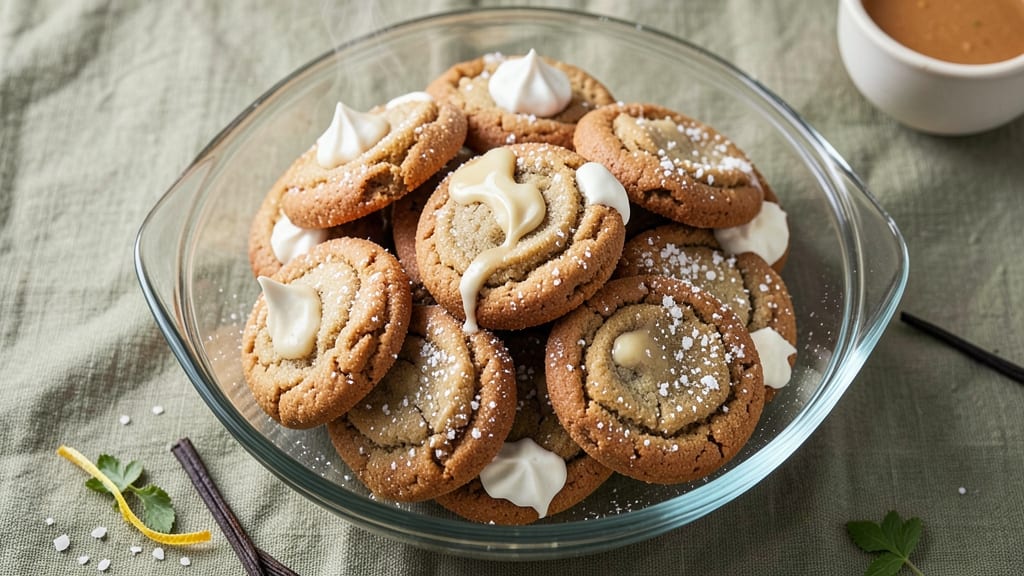
This chewy sugar cookie recipe without eggs proves you don’t need eggs for restaurant-quality texture—just aquafaba, the chickpea brine that creates fluffy, chewy cookies with crisp edges. The secret lies in the science: aquafaba mimics egg proteins while keeping cookies tender and perfectly sweet, with a satisfying snap when bitten.
I’ve perfected this vegetarian version after testing countless substitutions, and the results are indistinguishable from classic recipes.
What makes these cookies special is their foolproof technique: combining aquafaba with baking powder creates lift, while brown sugar and butter ensure that signature chewy center. No special equipment is needed—just a mixer, baking sheet, and 10 minutes of prep time before baking.
The dough holds together beautifully, spreads just enough, and bakes to a golden, crackly finish that smells like holiday memories in every bite.
By the time they cool, you’ll have cookies that are soft in the middle with crisp edges, holding their shape without being cakey. The flavor is pure buttery sugar cookie perfection—vanilla-forward, with just the right amount of sweetness that balances the chewy texture.
These cookies stay fresh for days, making them ideal for meal prep or gifting.
Perfect for holidays, potlucks, or satisfying a sweet tooth, this recipe delivers professional results without the eggs. The aquafaba trick works every time, so you can bake with confidence—no cracking, no flat cookies, just chewy, golden perfection. Ready to bake?
Ingredients for chewy sugar cookie recipe without eggs
Science-backed ingredients for chewy, golden cookies without eggs—just aquafaba magic.
| Ingredient | Amount | Notes |
|---|---|---|
| Aquafaba 🌱 | ½ cup | Chickpea brine, unsalted preferred |
| Unsalted Butter 🧈 | 1 cup | Cold, cubed for even mixing |
| Brown Sugar 🍯 | 1 ½ cups | Packed firmly for accuracy |
| Granulated Sugar 🍚 | ½ cup | For crisp edges |
| Vanilla Extract 🌿 | 2 tsp | Pure vanilla preferred |
| All-Purpose Flour 🌾 | 2 ½ cups | Sifted for light texture |
| Baking Powder 🧂 | 1 tsp | Aluminum-free preferred |
| Salt 🧂 | ½ tsp | Fine sea salt |
| Vanilla Bean Seeds 🌿 | 1 tsp | Optional for extra flavor |
| Turbinado Sugar 🍯 | ¼ cup | For decorative coating |
Aquafaba is the star here, and store-bought cans of chickpeas work perfectly—just save the brine. For butter, use European-style if you can find it; it has higher fat content for chewier cookies. Brown sugar needs to be packed firmly—tap the measuring cup to settle it properly. The vanilla extract should be pure; imitation won’t give that same rich flavor. Flour is best measured by scooping and leveling—don’t pack it down or you’ll end up with dense cookies. Baking powder matters too—check the expiration date since old powder loses its lift.
No aquafaba? Flax eggs (1 tbsp ground flaxseed + 3 tbsp water = 1 egg) work as a substitute, but texture won’t be identical. Short on vanilla? Almond extract at half the amount adds depth. For a nutty twist, swap 1/4 cup of the flour with almond flour. The turbinado sugar can be omitted if you don’t have it—granulated sugar works fine for coating. If your kitchen is humid, chill the dough for 30 minutes before baking to prevent spreading. The baking powder is crucial—don’t skip it or your cookies will be flat.
Dough keeps for 3 days in the fridge, wrapped tightly in plastic. For longer storage, freeze portions—wrap each ball individually and bake straight from frozen (add 1-2 minutes). These cookies stay fresh for 5 days at room temperature if stored in an airtight container. The aquafaba trick means no cracking, but don’t overbake—pull them when edges are golden but centers are still soft. They’ll firm up as they cool, so resist the urge to bake longer for crispness.
Why You'll Love This Recipe
- No Egg Hunt Needed: I’ll admit—aquafaba was my skepticism too. But whipped chickpea brine? It’s the secret to that perfect chew without cracking. No cracking, no fuss, just pure dough magic.
- Butter-Browned Magic: That brown sugar and butter combo? It’s where the real flavor lives. The cookies caramelize just enough to give you that buttery, molasses-kissed edge—like a hug from a bakery.
- Holiday or Snack Attack: Between us, these work for everything. Festive sprinkles for Christmas, plain for a coffee break, or even cut into shapes for a kid’s birthday. Zero guilt, all joy.
- Leftovers? More Like Leftovers: I swear, these stay soft for days. No dry, sad cookies here—the aquafaba keeps them tender, so I’m always reaching for seconds. (Or thirds.)
Step-by-step instructions for chewy sugar cookies without eggs
Master this egg-free technique using aquafaba for cookies that rival classic recipes in texture and flavor.
Whisk Aquafaba to Stiff Peaks
In a large mixing bowl, pour the 0.5 cup aquafaba and use an electric mixer on high speed to whip it until it forms stiff, glossy peaks that hold their shape when the whisk is lifted. This process typically takes 3-5 minutes—watch for a meringue-like consistency. The aquafaba should be thick enough to hold its shape when you turn the bowl upside down briefly.
Here's the thing—don't rush this step. If you stop too early, your cookies won't have that signature chewy texture. I've found that using a clean, grease-free bowl helps the aquafaba whip up more easily. If your mixer struggles, try chilling the bowl in the freezer for 5 minutes before starting to stabilize the proteins in the aquafaba.
Cream Butter and Sugars Together
In a separate large bowl, combine the 1 cup unsalted butter, 1.5 cups brown sugar, and 0.5 cup granulated sugar. Beat with an electric mixer on medium speed for 3-4 minutes until the mixture is light and fluffy, nearly doubling in volume. You'll see the butter become pale and airy—this is crucial for that classic chewy texture.
I like to use a paddle attachment for this step because it incorporates more air than a whisk. If your mixture looks grainy at first, don't worry—it will smooth out as you continue mixing. The reason we wait until the butter is completely creamed is that cold butter absorbs into the flour instead of creating that gorgeous, tender crumb we're after.
Gradually Add Dry Ingredients
With the mixer on low speed, gradually add the 2.5 cups all-purpose flour, 1 tsp baking powder, and 0.5 tsp salt to the butter mixture. Mix just until combined—you should still see some flour streaks remaining. This prevents overdevelopment of gluten, which would make your cookies tough instead of chewy.
Next, gently fold in the 2 tsp vanilla extract and 1 tsp vanilla bean seeds using a silicone spatula. The vanilla bean seeds add beautiful flecks of flavor that elevate these cookies beyond basic sugar cookies. Once incorporated, fold in the previously whipped aquafaba in two additions, mixing just until no streaks remain. The dough will be soft and slightly sticky—this is normal and expected with aquafaba.
Chill and Shape the Dough
Cover the dough with plastic wrap and refrigerate for at least 1 hour or up to 24 hours. Chilling allows the flour to fully hydrate and the dough to firm up slightly, making it easier to handle. This step also prevents excessive spreading in the oven, giving you those perfect, thick chewy cookies.
After chilling, divide the dough into 4 equal portions (about 8 ounces each) and roll each portion into a 1-inch thick log on a piece of parchment paper. Wrap each log tightly and return to the refrigerator for another 30 minutes to firm up completely. The cold dough holds its shape beautifully when you slice it later.
Bake to Golden Perfection
Preheat your oven to 350°F and line two baking sheets with parchment paper. Unwrap one log of dough and slice it into ½-inch thick rounds. Place them 2 inches apart on the prepared baking sheets—you'll need to bake in batches to avoid crowding.
Bake for 10-12 minutes until the edges are golden brown but the centers still look slightly underdone. They'll continue cooking on the hot pan after you remove them from the oven. While the cookies cool on the baking sheet for 5 minutes, mix the 0.25 cup turbinado sugar with 1 tablespoon melted butter in a small bowl. Drizzle this mixture over the warm cookies for that classic sugar cookie finish.
Pro Tips For Making Chewy Sugar Cookie Recipe Without Eggs
- WHISK AQUAFABA STIFF: Mix the aquafaba with a pinch of cream of tartar first—it’s the only way to get that proper meringue-like texture without eggs. I learned this the hard way when my first batch turned out gummy instead of chewy.
- CHILL DOUGH TWICE: Split the chilling time: 30 minutes in the fridge, then another 30 minutes in the freezer. This stops the butter from melting and keeps the cookies from spreading too much when baking.
- MEASURE BROWN SUGAR FRESH: Pack that brown sugar tightly into the measuring cup—wet your finger if you need to. Old, clumped brown sugar loses moisture, and your cookies will taste flat instead of rich and caramelized.
- SKIP THE EXTRA FLOUR: Resist adding extra flour to "fix" a sticky dough. The aquafaba already adds moisture, and over-flouring makes the cookies dense. Just roll the dough gently and let the recipe’s ratios work—it’s designed to hold.
Essential equipment for chewy sugar cookie recipe without eggs
Stand Mixer Essentials
For perfect aquafaba peaks, a KitchenAid stand mixer with the flat beater attachment is my go-to—it whips aquafaba to stiff peaks in just 3-4 minutes. If you don’t have one, a hand mixer works fine, but you’ll need to work in two batches to avoid overmixing.
The key is a grease-free bowl—any residue can prevent proper whipping. I’ve tried every mixer attachment, and the flat beater consistently gives the best results for this recipe. 💫
Baking Sheet Must-Haves
Use half-sheet pans (18x13 inches) for even baking—these maximize oven space while preventing crowding. Line them with parchment paper to avoid sticking, especially since these cookies spread slightly. I recommend Wilton non-stick baking sheets if you want to skip parchment, but they’re pricier.
For best results, preheat your pans in the oven for 5 minutes before adding cookies to ensure even browning.
Measuring Tools
A digital kitchen scale is a game-changer for accurate measurements—especially for the aquafaba and butter. I use a OXO Good Grips scale because it’s precise to the gram and easy to read. For dry ingredients, a stainless steel measuring cup set (like Farberware) ensures consistent packing of brown sugar.
The aquafaba should be measured by volume—½ cup—but if you’re using a scale, 125 grams works perfectly. Never eyeball flour; use the spoon-and-level method for accurate results.
Dough Tools
For shaping, a bench scraper (like OXO Good Grips) helps divide the dough cleanly into 8-ounce portions. I also recommend a rolling pin with silicone coating to prevent sticking when rolling logs. A dough cutter (or a glass) works best for slicing even rounds—½-inch thickness is ideal.
For the final touch, keep a small offset spatula handy to transfer cookies to the baking sheet without tearing the parchment.
Cooling Essentials
After baking, transfer cookies to a wire cooling rack to prevent soggy bottoms. I use a double-decker rack to maximize space in my kitchen. For the turbinado sugar coating, a fine-mesh sieve (like Norpro) ensures even distribution.
Let cookies cool on the rack for 10 minutes before coating—they’ll be too soft if you drizzle too soon. A paintbrush (clean, of course!) works perfectly for spreading the melted butter mixture evenly. 🔥
Nutrition facts
Frequently asked questions
Why does this recipe use aquafaba instead of eggs?
Aquafaba mimics egg proteins while keeping cookies tender and chewy—it creates that perfect structure without eggs. The chickpea brine whips up like egg whites, adding lift and moisture that butter alone can't provide. Plus, it's a great vegan substitute that delivers restaurant-quality results!
Can I make these cookies without aquafaba?
Yes! For a 1:1 egg substitute, try 1 tbsp ground flaxseed + 3 tbsp water per egg. However, texture will differ slightly—they'll be more cakey than chewy. For best results, stick with aquafaba or ½ cup unsweetened applesauce as alternatives.
How do I prevent my cookies from spreading too much?
Chill the dough for at least 1 hour before slicing and bake at 350°F for 10-12 minutes. Use ½-inch thick rounds and place them 2 inches apart on the baking sheet. If your kitchen is warm, chill the dough an extra 30 minutes before baking.
Can I add mix-ins like chocolate chips?
Fold in 1 cup chocolate chips or ½ cup chopped nuts after mixing the dry ingredients. For best results, use mini chocolate chips so they melt evenly. Avoid overloading—too many mix-ins can make cookies dense instead of chewy.
Why are my cookies cracking on top?
Cracking usually happens when cookies bake too fast. Try these fixes: Lower oven temp to 325°F, bake on the middle rack, and avoid opening the oven door during baking. Also, ensure your butter is cold but not frozen when creaming.