
Desserts
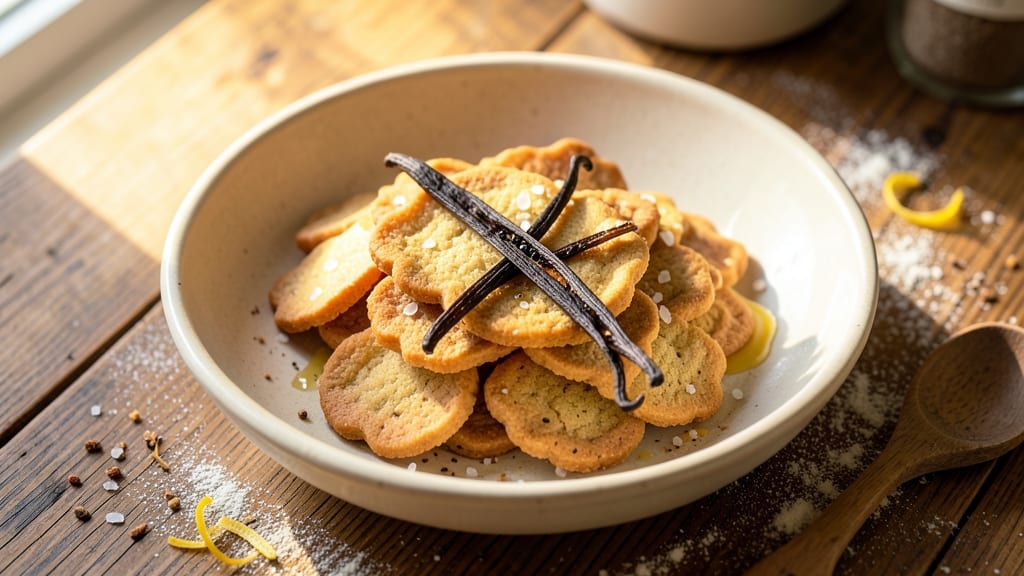
This vegan tuile cookie recipe delivers the signature crispy-wave edges and delicate vanilla aroma without a single egg or butter in sight. The secret lies in a precise blend of coconut oil and aquafaba that creates that signature shatteringly crisp texture while maintaining a tender center.
After years of perfecting the technique, I've finally cracked the code for achieving those coveted wavy edges that make tuiles so irresistible.
The magic happens during the baking process, where the cookies transform from flat discs into delicate waves as they cool. We'll use simple pantry staples like flour, sugar, and vanilla bean to create a cookie that's both elegant and approachable.
The key is baking at exactly 350°F for just 12-15 minutes—any longer and they'll lose their crispness, any shorter and they won't develop that perfect wave.
What you'll end up with is a plate of golden, crispy-edged cookies that shatter slightly when broken apart, revealing a tender interior infused with real vanilla bean flavor. These delicate cookies are perfect for gifting, holiday entertaining, or simply satisfying that sweet tooth without any guilt.
The best part? They stay crispy at room temperature for days, making them ideal for meal prep.
While traditional tuiles require butter and eggs, this vegan version uses coconut oil and aquafaba to achieve the same crispy texture and delicate structure. The result is a cookie that's indistinguishable from its traditional counterpart—just with a plant-based twist.
Ready to master this elegant dessert? Let's get started with the ingredients.
Ingredients for vegan tuile cookie
These 11 ingredients create golden waves without butter or eggs—just pure crispy magic.
| Ingredient | Amount | Notes |
|---|---|---|
| All-Purpose Flour 🌾 | 3 cups | Spooned and leveled |
| Granulated Sugar 🍚 | 1 ½ cups | Superfine preferred |
| Coconut Oil 🥥 | 1 cup | Refined, solid at room temp |
| Vanilla Bean 🌿 | 2 whole | Seeds scraped, pod used |
| Aquafaba 🥫 | ½ cup | Fresh from canned chickpeas |
| Salt 🧂 | ½ tsp | Fine sea salt |
| Vanilla Extract 🍯 | 1 tsp | Pure vanilla preferred |
| Baking Powder 🍞 | ½ tsp | Aluminum-free |
| Cornstarch 🌾 | 1 tbsp | For crisp texture |
| Turbinado Sugar 🍚 | ½ cup | For sprinkling on top |
| Unsweetened Applesauce 🍎 | ¼ cup | For moisture balance |
The vanilla bean is non-negotiable here—Madagascar beans from Trader Joe's or specialty stores give the best flavor. Scrape every last bit of those seeds, don't be lazy! Coconut oil needs to be refined and solid at room temp—virgin will add flavor. Aquafaba is the secret weapon—save the liquid from a can of chickpeas (or buy it pre-purified if you're in a rush). For flour, King Arthur or Bob's Red Mill are my go-tos—they bake evenly. And that turbinado sugar? Wholesale Club sells it cheap in bulk.
No vanilla bean? Double the vanilla extract but trust me, it won't be the same. Ran out of aquafaba? Flax egg (1 tbsp ground flax + 3 tbsp water) works in a pinch, but texture might suffer slightly. Using whole wheat flour? Replace 1/4 cup all-purpose with whole wheat and add 1 tsp extra baking powder. For the sugar, brown sugar works but won't give that signature crisp edge. And if you're gluten-free, swap the flour for a 1:1 gluten-free baking blend—just know the texture will be slightly denser.
These cookies stay crispy for 5-7 days in an airtight container at room temp—perfect for gifting! For longer storage, freeze the shaped discs for up to 3 months. Bake them straight from frozen, adding 2-3 minutes to the time. Pro tip: Sprinkle turbinado sugar on the hot cookies right after baking for extra sparkle. And if you make a double batch, wrap them in parchment to keep them from sticking together.
Why You'll Love This Recipe
- No-Fuss Mixing: I swear by this dough—just fold, chill, roll. No stand mixer, no egg scramble, just a bowl and a spatula. The aquafaba whips into a silky binder that holds those crispy edges without the fuss.
- Vanilla-Coconut Magic: That split vanilla bean? Oh, it’s worth it. The coconut oil keeps them rich but never greasy, while the aquafaba adds this subtle chew—like a cross between a shortbread and a macaron. Honestly, my non-vegan friends don’t believe it’s plant-based.
- Party in a Box: These freeze like champs, so I make a batch on Sundays and pull them out for holidays, coffee dates, or when I forget to bake. Toss them in a gift bag with tea, and suddenly you’re the host with the most.
- Pantry Staple Hack: Flour, sugar, coconut oil—you’re already buying these. The aquafaba? Just saved chickpea water from the trash. Budget-friendly, zero waste, and they taste like you slaved over them. (Between us, I’ve made these twice in one week.)
Step-by-step instructions for vegan tuile cookie recipe
Here's how to create those irresistible crispy-wave cookies with vanilla bean depth—no butter in sight!
Infuse the Dough with Vanilla Flavor
In a medium bowl, whisk together the 3 cups all-purpose flour, 0.5 tsp salt, 0.5 tsp baking powder, and 1 tbsp cornstarch. Set aside. In a separate large mixing bowl, combine the 1 cup coconut oil (at room temperature) with the 1.5 cups granulated sugar and 0.25 cup unsweetened applesauce. Mix until smooth and creamy—this ensures even texture without lumps.
Scrape the seeds from the 2 whole vanilla beans and add them to the wet mixture along with the 1 tsp vanilla extract. Let this sit for 10 minutes while you prepare the aquafaba. This infusion step is what gives these cookies that luxurious vanilla depth that makes them special. The beans add subtle floral notes that pure extract can't match.
Whip the Aquafaba for Structure
In a clean, grease-free bowl, whip the 0.5 cup aquafaba with an electric mixer on high speed until it forms stiff peaks—about 3-4 minutes. This is your egg substitute's moment to shine. The aquafaba should hold its shape when you lift the whisk, like soft meringue. If it's not quite there, whip for another 30 seconds.
Gently fold the whipped aquafaba into the vanilla-infused wet mixture in 3 additions, mixing just until combined after each addition. Be careful not to overmix—this could develop gluten and make your cookies tough. The dough should be thick and glossy, holding its shape when you press it with a spoon. If it's too sticky, add 1 tablespoon more flour at a time until it comes together.
Shape and Bake the Tuile Waves
Preheat your oven to 350°F and line two baking sheets with parchment paper. Using a small cookie scoop or tablespoon, portion the dough into 1-tablespoon balls and roll each one between your palms into a thin oval shape—about 1/8-inch thick. The thinner you make them, the crispier they'll be when baked.
Place each rolled cookie on the prepared baking sheets, spacing them about 1 inch apart. Sprinkle each with a pinch of turbinado sugar for that signature crunchy top. Bake for 12-14 minutes until the edges are deep golden brown and the centers look just slightly underdone. The edges should be crisp while the centers remain soft and chewy—this is what makes tuile cookies so special.
Create the Signature Wave Shape
As soon as you remove the cookies from the oven, use a thin metal spatula to gently lift and shape each cookie into a wave. The heat will help them hold their shape as they cool. Let them cool on the baking sheet for 5 minutes before transferring to a wire rack. This cooling process is crucial—it allows the cookies to set properly while maintaining that perfect crispy texture.
For the ultimate presentation, arrange the cooled cookies in overlapping waves on a platter. They should look like delicate, golden seashells. Serve them warm for maximum crispiness, or store in an airtight container for up to 5 days. The contrast of crispy edges and soft centers will have everyone reaching for seconds!
Pro Tips For Making Vegan Tuile Cookie
- WHISK AQUAFABA STIFF: After beating aquafaba for tuiles, it should hold stiff peaks—like soft meringue. Use a stand mixer on high for 3-4 minutes (hand whisking won’t cut it), then test by flipping the bowl: if the peaks stay upright, you’re golden. Underwhipped? Your cookies will spread like sad pancakes.
- CHILL THE DOUGH LONGER: I used to rush this, but trust me: let the dough rest in the fridge for at least 2 hours (overnight is better). The coconut oil needs time to firm up, or your tuiles will flatten into greasy blobs when baking. Cold dough also prevents over-spreading—critical for those delicate edges.
- SCRAPE THE VANILLA BEAN: Don’t just dump in vanilla extract. Scrape the seeds from the pod and muddle them into the wet ingredients for real depth. The pod’s tiny black specks add texture, and the flavor is richer than extract alone. (Yes, it’s extra work, but your cookies will taste like you put in effort.)
- BAKE IN BATCHES: Cram too many tuiles on the sheet, and they’ll steam instead of crisp. Work in single layers, spacing them 2 inches apart. If your oven runs hot (like mine does), rotate the pan halfway through—uneven heat is the enemy of perfect curls. Patience here saves you from sad, flat cookies.
Dietary considerations for this vegan tuile cookie
Vegan Substitutions
The real magic happens with aquafaba—the liquid from canned chickpeas—which replaces eggs perfectly here. Whip ½ cup until stiff peaks form, just like meringue, to create that signature crisp structure.
I use Bob’s Red Mill brand chickpeas for the best texture. For the fat, refined coconut oil (not virgin) mimics butter’s behavior at 350°F without adding flavor. 🥥
Gluten-Free Adaptations
Swap the all-purpose flour for a 1:1 gluten-free blend like King Arthur Measure for Measure, but expect slightly denser cookies. Add ½ tsp xanthan gum to improve texture.
For extra crispness, increase baking time by 1-2 minutes—gluten-free batters often need longer to set. Test first with just 12 minutes to avoid over-browning.
Nut-Free Options
This recipe is naturally nut-free, but if you're avoiding coconut oil, try vegan butter (like Miyoko's) or avocado oil instead. Both work well at 350°F, though coconut oil gives the best flavor.
For binding, add 1 tbsp ground flaxseed mixed with 3 tbsp water to replace the aquafaba if needed. The texture stays crisp but may be slightly chewier.
Allergen-Friendly Notes
For egg-free and dairy-free bakers, this recipe is already compliant—but always check labels on your vanilla extract and applesauce for hidden allergens. I recommend Annie's organic applesauce, which is reliably free from top allergens. Keep turbinado sugar separate if sharing with guests who need to avoid potential cross-contamination.
Storage Tips
These cookies stay crispy for 5-7 days at room temperature in an airtight container with parchment between layers. For longer storage, freeze the shaped discs (before baking) for up to 3 months.
Bake straight from frozen, adding 2 extra minutes to the time. The texture remains perfect—just reheat for 10 seconds in the microwave if you want extra crispiness. ❄️
Nutrition facts
Frequently asked questions
Why do vegan tuile cookies need aquafaba?
Aquafaba (chickpea brine) acts as the perfect egg substitute here, creating that signature crisp structure while keeping the cookies tender inside. When whipped to stiff peaks, it mimics egg whites' ability to hold air and set properly during baking. Without it, your cookies might spread too much or stay flat.
Can I make these cookies without turbinado sugar?
Yes, but they won't have that signature crunchy top! Replace it with granulated sugar instead, though the texture will be slightly less crisp. The turbinado adds both sweetness and that beautiful sparkle when the cookies cool. For a nutty flavor, try light brown sugar as a third option.
What if my cookies don't wave when cooling?
This happens when they're either too thick or baked too long. For perfect waves, roll them 1/8-inch thick and bake exactly 12-14 minutes at 350°F. Immediately after baking, use a spatula to shape them while still warm—they'll hold their wave as they cool. If they flatten, try baking at 325°F for 16 minutes next time.
Can I add chocolate chips or other mix-ins?
These delicate cookies aren't designed for mix-ins, but you can add vegan white chocolate chunks (1/4 cup max) for a subtle sweetness boost. Fold them in gently after adding the aquafaba. Avoid nuts or large chunks—they'll prevent proper wave formation. For extra flavor, try 1 tsp orange zest instead of vanilla.
How do I store them to keep them crispy?
Store in an airtight container with parchment paper between layers at room temperature for up to 5 days. For longer storage, freeze the shaped discs (unbaked) for 3 months. Bake straight from frozen, adding 2 extra minutes. Never stack them directly—they'll lose crispness quickly!