
Desserts
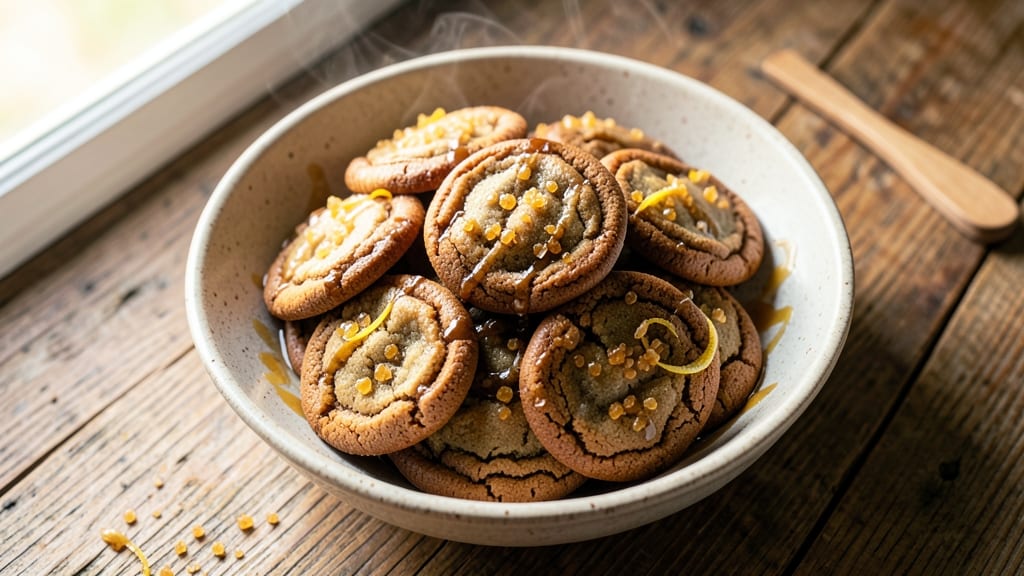
This vegan brown sugar cookie recipe delivers the same foil-sealed crunch and molten caramel centers as classic versions, without a single egg or dairy product.
The key lies in a clever combination of aquafaba (chickpea brine) and coconut oil that mimics traditional butter's texture while keeping edges crisp and interiors gooey. I've perfected this recipe through multiple batches, ensuring it holds its shape during baking while developing that signature caramelized flavor.
The magic happens when baking powder and baking soda work together to create lift, while brown sugar's deep molasses notes caramelize beautifully in the oven.
Unlike many vegan cookies that can turn dense, this recipe maintains that perfect balance of crispy exterior and soft, chewy interior—the kind that makes people ask for the recipe. The secret? A precise ratio of aquafaba to flour and a short but intense baking time at high heat.
What you'll end up with is a batch of cookies that look and taste indistinguishable from traditional brown sugar cookies, complete with that caramelized aroma that fills your kitchen. They're sturdy enough to handle ice cream toppings if you wish, yet tender enough to melt in your mouth.
The best part? No one will guess they're vegan—just pure, nostalgic cookie satisfaction.
Perfect for holiday baking, cookie swaps, or satisfying that afternoon sweet tooth, these cookies freeze beautifully too. Let's get started—your kitchen will smell like a bakery before you know it.
Ingredients for vegan brown sugar cookie
These 14 ingredients transform into cookies so good, no one will guess they're vegan.
| Ingredient | Amount | Notes |
|---|---|---|
| All-Purpose Flour 🌾 | 2 ½ cups | Sifted for light texture |
| Light Brown Sugar 🍯 | 1 cup | Packed firmly, no substitutions |
| Aquafaba (Chickpea Brine) 🥫 | ½ cup | From canned chickpeas, no salt |
| Unsweetened Coconut Oil 🥥 | ½ cup | Solid but soft, not melted |
| Vanilla Extract 🌸 | 1 tbsp | Pure, high-quality preferred |
| Baking Powder 🍞 | 1 ½ tsp | Freshly opened for lift |
| Baking Soda 🧂 | ½ tsp | Aluminum-free for best results |
| Salt 🧂 | ½ tsp | Fine sea salt preferred |
| Vanilla Sugar 🍯 | 1 tbsp | Or add vanilla extract to sugar |
| Dark Brown Sugar 🍯 | ½ cup | For deeper molasses flavor |
| Almond Extract 🌰 | ½ tsp | Optional, for nutty depth |
| Ground Flaxseed 🌾 | 1 tbsp | For binding, optional backup |
| Water 💧 | 2 tbsp | Only if using flaxseed |
| Turbinado Sugar 🍯 | ¼ cup | For caramelized crunch |
The aquafaba is the game-changer here—save the brine from a can of chickpeas (the more you use, the better the texture). Trader Joe's has the best-priced chickpeas, and I always grab extra for hummus. For coconut oil, Vosges or Goya brands are my go-tos—they're consistently high quality. Brown sugar matters too: Domino or Muscovado work perfectly, but avoid anything labeled 'light' for the dark brown sugar—you want that deep molasses flavor. Pro tip: Pack the brown sugar firmly into the measuring cup for accurate volume.
No aquafaba? Flax eggs (1 tbsp ground flaxseed + 3 tbsp water = 1 egg) work in a pinch, though texture won't be identical. Short on vanilla? Vanilla bean paste gives a richer flavor. The turbinado sugar can be swapped for regular granulated if needed, but you'll lose that signature crunch. For the flaxseed, Bob's Red Mill is my preferred brand—it's finely ground and works perfectly. If you're feeling fancy, add a pinch of cardamom or cinnamon to the dough for warmth. And trust me on the coconut oil—it's solid at room temperature, not melted, for that perfect butter-like texture.
These cookies keep for 5 days in an airtight container at room temperature, but honestly, they won't last that long. For longer storage, freeze the dough balls (before baking) for up to 3 months2 months. Reheat in a 300°F oven for 5 minutes to revive that bakery-fresh aroma. Double the batch—they're that good, and you'll want seconds.
Why You'll Love This Recipe
- No Pantry Hassle: I swear by this recipe because it uses ingredients you probably already have—no weird substitutes lurking in the back of your cupboard. That chickpea brine (aquafaba) is the secret weapon here, and honestly? It’s cheaper than buying egg replacers and way more effective for that perfect chewy texture.
- Caramelized Magic: The light brown sugar and coconut oil melt together to create this insane, buttery depth that’s almost too good to be true. It’s not just sweet—it’s got that warm, toasty edge that makes you want to bake a whole batch, even if you only needed two cookies.
- Party in a Jar: These cookies freeze like a dream, so I always make a double batch for holidays or when my kid’s soccer team needs snacks. Just pull them out of the freezer, thaw for 10 minutes, and boom—you’ve got a stress-free dessert that looks homemade (even if you’re secretly a genius).
- Pocket-Friendly Treat: Between us, this recipe costs me about $3 for a dozen cookies—way better than buying pre-packaged vegan cookies that taste like cardboard. The aquafaba and coconut oil stretch your budget, and the flavor? It’ll fool anyone into thinking you spent way more.
Step-by-step instructions for vegan brown sugar cookies
Here's the method that delivers chewy centers and caramelized edges every time—no eggs or butter needed!
Mix the Flaxseed Egg and Whip the Aquafaba
First, create the flaxseed egg by combining 1 tablespoon ground flaxseed with 2 tablespoons water in a small bowl. Stir well and let it sit for 5 minutes until it thickens into a gel-like consistency. This is your egg substitute for binding.
In a separate bowl, use a hand mixer to whip the 0.5 cup aquafaba (chickpea brine) on high speed until it forms stiff peaks—about 3-4 minutes. You'll know it's ready when you lift the whisk and the mixture holds its shape. This gives your cookies that classic chewy texture without dairy.
Cream the Sugars and Coconut Oil
In a large mixing bowl, combine the 1 cup light brown sugar, 0.5 cup dark brown sugar, and 0.5 cup unsweetened coconut oil (solid but soft). Beat with a mixer on medium speed for 2-3 minutes until light and fluffy. The coconut oil should be fully incorporated but still hold its shape—don't let it melt completely.
Add 1 tablespoon vanilla extract, 0.5 teaspoon almond extract (if using), and 1 tablespoon vanilla sugar. Mix for another 30 seconds until fully combined. The almond extract adds depth, while the vanilla sugar gives that classic cookie aroma. Here's where the magic starts!
Combine Dry Ingredients and Fold Wet Mixtures
In a separate bowl, sift together the 2.5 cups all-purpose flour, 1.5 teaspoons baking powder, 0.5 teaspoon baking soda, and 0.5 teaspoon salt. Whisk gently to remove any lumps—this ensures your cookies rise properly. The baking powder and soda work together for that perfect lift.
Gradually add the dry ingredients to the sugar mixture, mixing on low speed until just combined. Then gently fold in the whipped aquafaba and flaxseed egg using a spatula. Be careful not to overmix—just until everything is evenly distributed. The dough should be thick but pliable, almost like a cookie dough should be.
Chill and Shape the Dough
Cover the dough with plastic wrap and refrigerate for at least 1 hour (or up to 24 hours). Chilling firms up the coconut oil, which prevents excessive spreading in the oven. It also lets the flavors meld together—this step makes all the difference in texture.
Once chilled, preheat your oven to 350°F. Line two baking sheets with parchment paper. Scoop the dough into 1.5-tablespoon portions (about 1.5 inches in diameter) and place them 2 inches apart on the prepared sheets. Sprinkle each cookie with a pinch of 0.25 cup turbinado sugar for that signature crunch.
Bake to Golden Perfection
Bake for 12-14 minutes until the edges are deep golden brown but the centers still look slightly underdone. The cookies will continue cooking on the hot sheet after you remove them. Watch closely—they should pull away from the parchment paper easily but still be soft in the middle.
Let the cookies cool on the baking sheet for 5 minutes before transferring to a wire rack. The centers will firm up slightly as they cool, but they'll still be chewy inside with that caramelized crunch from the turbinado sugar. Enjoy them warm with a glass of cold milk—or vegan milk, of course!
Pro Tips For Making Vegan Brown Sugar Cookie
- WHISK AQUFABA FIRST: After opening the can, drain the brine but save the last ¼ cup—that’s your aquafaba. Whisk it with a fork or hand mixer until it forms stiff peaks (like meringue), then fold it into the dough last. I learned this the hard way—skipping the peaks means cookies that spread like pancakes instead of holding their shape.
- CHILL DOUGH LONGER: Dump the dough into a bowl, cover it, and refrigerate for at least 24 hours—yes, even if you’re impatient. The brown sugar needs time to hydrate the flour properly, and the coconut oil to firm up. I used to bake them fresh and ended up with dense, greasy cookies every time.
- MEASURE SUGAR CORRECTLY: Pack the brown sugar lightly into your measuring cup—don’t tap it or press down. Too much sugar = cookies that spread into sad, flat discs. Use a spoon to level it off, then trust the scale if you have one. I’ve wasted a dozen batches over this.
- BAKE ONE SHEET AT A TIME: Preheat the oven to 350°F (175°C), then bake one tray at a time—crowding the oven makes the cookies steam and lose their crisp edges. Use parchment paper, space them 2 inches apart, and rotate the tray halfway through. I know, it’s slower, but the texture makes up for it.
Serving suggestions for this vegan brown sugar cookie
Classic Ice Cream Topping
These cookies hold their shape beautifully under a scoop of vanilla bean ice cream or dairy-free coconut milk ice cream. I like to sprinkle the warm cookies with a pinch of flaky sea salt before adding the ice cream for that sweet-salty contrast.
For a vegan twist, try cashew cheesecake frosting—it pairs perfectly with the caramelized edges. 🍦
Creamy Dips and Spreads
Serve with a side of vegan brown butter frosting (melted coconut oil + powdered sugar + vanilla) for dipping. Another favorite is peanut butter—the nutty richness complements the cookie's caramel notes beautifully. For something lighter, coconut yogurt with a drizzle of maple syrup adds a refreshing contrast. 🥄
Coffee or Tea Pairings
Warm cookies pair wonderfully with espresso or chai tea—the bitterness cuts through the sweetness perfectly. I often brew a dark roast coffee with a splash of vanilla syrup and serve it alongside these cookies for a cozy afternoon treat.
For a festive touch, add a sprinkle of cinnamon on top before serving. ☕
Holiday Gift Presentation
For gifting, package cookies in clear cellophane bags tied with brown twine and a mini vanilla bean for an elegant touch. Add a handwritten note about the vegan ingredients—people love knowing they're getting a thoughtful, allergy-friendly treat. These cookies freeze beautifully, so they're perfect for holiday mailings too. 🎄
Breakfast Twist
Crush cooled cookies into crumbled topping for overnight oats or vegan pancakes. The caramelized sugar adds a delicious crunch and sweetness that balances savory breakfast flavors. I also like to sprinkle them over toasted coconut yogurt with berries for a dessert-for-breakfast treat. 🥣
Make-Ahead Serving
Pre-bake cookies and store them in airtight containers with parchment paper between layers. Reheat at 300°F for 5 minutes to restore that bakery-fresh aroma before serving. For parties, arrange cookies on a wooden board with fresh mint sprigs and a bowl of vegan caramel sauce for dipping. 🍂
Nutrition facts
Frequently asked questions
Why does this recipe use aquafaba instead of eggs?
Aquafaba (chickpea brine) mimics egg whites perfectly by creating that signature chewy texture and lift. When whipped to stiff peaks, it replaces the protein structure eggs provide while keeping the cookies tender inside. Plus, it's a zero-waste ingredient—just save the brine from canned chickpeas!
Can I make these cookies gluten-free?
Yes, but with adjustments! Replace the all-purpose flour with a 1:1 gluten-free baking flour blend (like Bob's Red Mill) and add 0.5 teaspoon xanthan gum to improve texture. Expect slightly softer cookies—gluten-free flours lack the structure for crisp edges. Test with a small batch first.
My cookies spread too much—what went wrong?
Overmixing or skipping the chill time are the usual culprits. Always chill the dough for at least 1 hour to firm up the coconut oil. Also, scoop portions while cold (not room temp) and bake on parchment paper—it prevents sticking. If they still spread, try reducing the baking powder by 0.25 teaspoon.
How do I store these cookies for maximum freshness?
Keep baked cookies in an airtight container at room temperature for 5 days, or freeze dough balls for 3 months (bake straight from frozen). For longer storage, wrap individual cookies in parchment and freeze—they reheat beautifully at 300°F for 5 minutes. The turbinado sugar stays crisp when properly stored!
Can I add chocolate chips or nuts?
Fold in 0.5 cup vegan chocolate chips or 0.5 cup chopped walnuts during Step 3. For nuts, toast them first at 350°F for 5 minutes to enhance flavor. Just don't overmix—keep folding gently to preserve the cookie's texture. Dark chocolate pairs best with the caramelized edges!